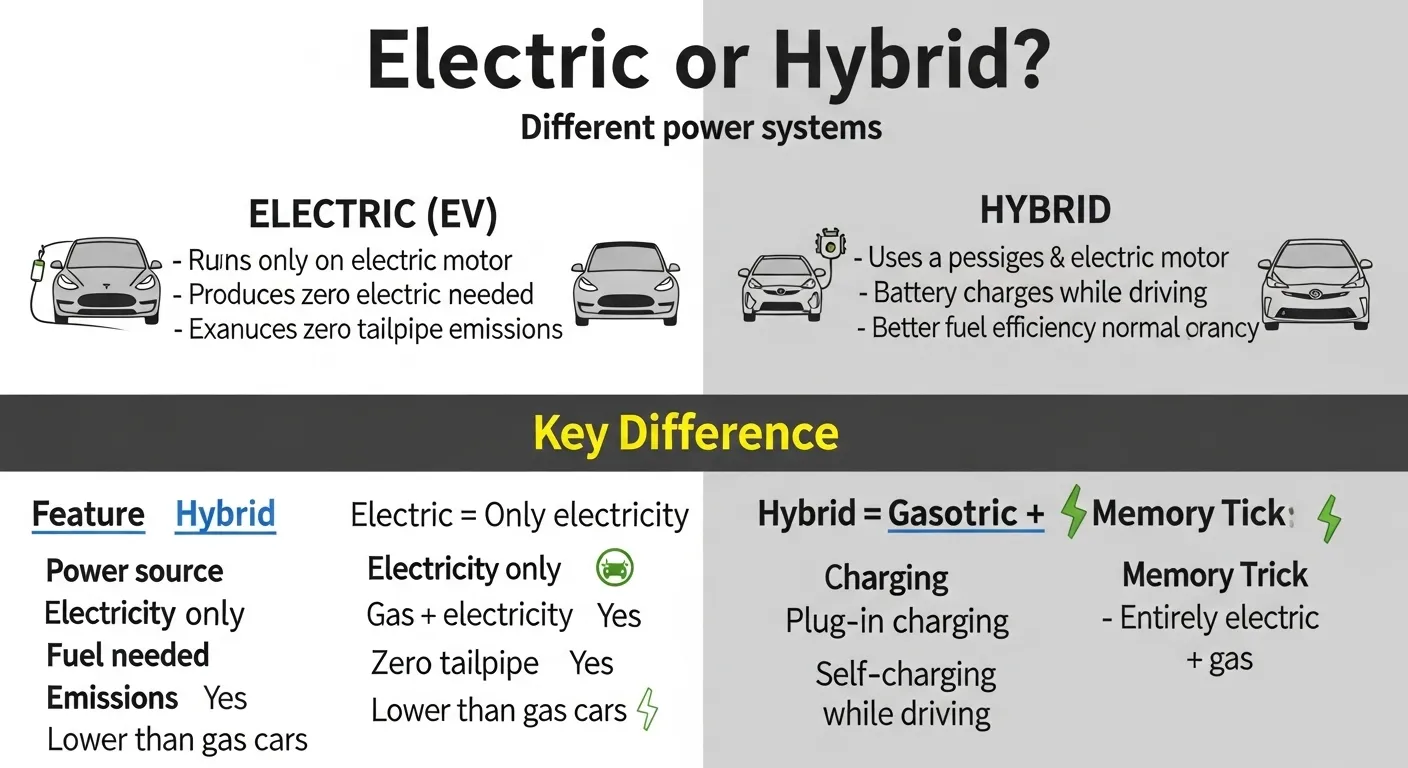
Electric cars run fully on electricity, while hybrid cars use both a gasoline engine and an electric motor.
In this guide, I will explain the difference between electric or hybrid vehicles and help you understand which option may be better for your needs.
Many people search for this comparison because modern car buyers want vehicles that save fuel, reduce emissions, and lower running costs. The confusion usually happens because both electric and hybrid cars include electric technology, but they work in different ways.
I will show you how each vehicle type works, their advantages, disadvantages, real-life usage examples, and common mistakes people make when choosing between electric or hybrid cars.
Electric or Hybrid : Quick Answer
Both electric cars and hybrid cars are designed to reduce fuel use and pollution, but they operate differently.
- Electric Car – Meaning: A vehicle powered completely by electricity using a battery and electric motor.
- Definition: A car that runs only on electric power and does not use gasoline.
- Hybrid Car – Meaning: A vehicle that combines a gasoline engine and an electric motor.
- Definition: A car that uses both fuel and electricity to improve efficiency and reduce fuel consumption.
Examples:
- ✅ An electric car charges from a power outlet.
- ✅ A hybrid car switches between fuel and electric power.
Both options aim to improve energy efficiency and reduce environmental impact.
The Origin of Electric or Hybrid Vehicles
Electric and hybrid vehicle technology has existed for more than a century.
Early electric cars appeared in the late 1800s, but gasoline cars became more popular because fuel was easier to obtain and batteries were limited.
Hybrid technology developed later to combine the advantages of both systems. One of the most famous hybrid cars introduced worldwide was the Toyota Prius, which helped popularize hybrid technology.
In recent years, fully electric cars have become more common thanks to improvements in batteries and charging networks. Companies such as Tesla helped accelerate the growth of electric vehicles.
Today, both vehicle types are widely available and continue to evolve.
Hybrid vs Electric Technology
Electric and hybrid vehicles use different systems to power the car.
Comparison Table
| Feature | Electric Car | Hybrid Car |
| Power Source | Electricity only | Gasoline + electricity |
| Fuel Use | No fuel | Uses gasoline |
| Charging | Requires charging station | Charges while driving |
| Engine | Electric motor only | Electric motor + fuel engine |
| Emissions | Zero tailpipe emissions | Lower emissions than normal cars |
Electric cars rely entirely on battery power, while hybrid cars combine electric and gasoline power.
Which Option Should You Choose?
The best choice depends on your driving habits and environment.
Choose an Electric Car If
- You want zero fuel usage
- You have access to charging stations
- You mainly drive in cities
- You want the lowest emissions
Example:
- Many drivers choose electric cars for short daily commutes.
Choose a Hybrid Car If
- Charging stations are limited in your area
- You drive long distances
- You want better fuel efficiency but still need gasoline backup
Example:
- Hybrid vehicles are often preferred for long highway trips.
Each option offers advantages depending on lifestyle and infrastructure.
Common Mistakes with Electric or Hybrid Vehicles
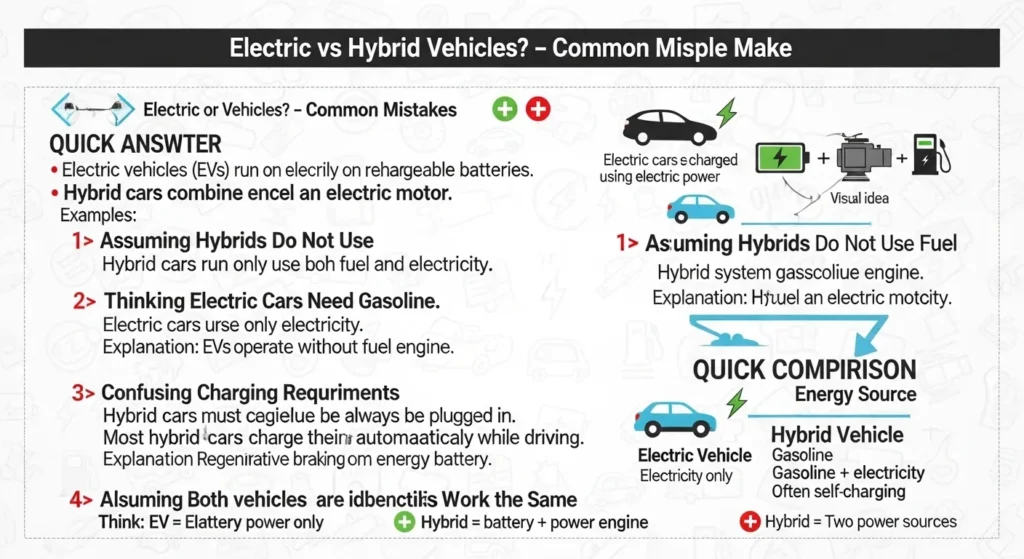
Assuming Hybrids Do Not Use Fuel
❌ Hybrid cars run only on electricity.
✅ Hybrid cars use both fuel and electricity.
Many people misunderstand this basic difference.
Thinking Electric Cars Need Gasoline
❌ Electric cars need gasoline to start.
✅ Electric cars use only electricity.
Electric vehicles do not use fuel engines.
Confusing Charging Requirements
❌ Hybrid cars must always be plugged in.
✅ Most hybrid cars charge their batteries automatically while driving.
Assuming Both Vehicles Work the Same
❌ Electric and hybrid cars are identical.
✅ They use different power systems.
Understanding these differences helps buyers make better decisions.
Electric and Hybrid in Everyday Examples 📧📰📱🧾
These examples show how the comparison appears in real conversations.
Email Example 📧
“I’m deciding between an electric or hybrid car for my next vehicle.”
News Example 📰
“More drivers are choosing electric or hybrid vehicles to reduce fuel costs.”
Social Media Example 📱
“I’m thinking about buying an electric or hybrid car this year.”
Formal Writing Example 🧾
“The company is expanding its electric or hybrid vehicle lineup.”
These examples show how people commonly discuss the topic.
Hybrid or Electric : Google Trends & Usage Data
Search interest in electric or hybrid vehicles has grown rapidly in recent years. This increase is linked to several global trends:
- rising fuel prices
- environmental awareness
- government incentives for electric vehicles
- improvements in battery technology
Countries showing strong interest include:
- United States
- United Kingdom
- India
- Pakistan
- Canada
Electric vehicles have gained popularity in cities with charging networks, while hybrid vehicles remain popular in regions where charging stations are still limited.
This trend shows that both technologies are becoming important in the future of transportation.
Comparison Table : Electric vs Hybrid
| Vehicle Type | Power System | Fuel Needed |
| Electric Car | Battery and electric motor | No |
| Hybrid Car | Gasoline engine + electric motor | Yes |
This simple comparison highlights the key difference.
FAQs About Electric or Hybrid
1. What is an electric car?
An electric car runs entirely on electricity using a rechargeable battery.
2. What is a hybrid car?
A hybrid car uses both gasoline and electric power.
3. Which vehicle is more environmentally friendly?
Electric cars generally produce fewer emissions.
4. Do hybrid cars need charging?
Most hybrid cars charge their batteries while driving.
5. Are electric cars cheaper to run?
Electric cars often have lower running costs because they do not require gasoline.
6. Can hybrid cars drive on electricity only?
Some hybrids can drive short distances using only electric power.
7. Are electric cars becoming more popular?
Yes. Improvements in battery technology and charging networks have increased their popularity.
Conclusion
The choice between electric or hybrid vehicles depends on several factors, including driving habits, access to charging stations, and personal priorities. Electric cars run completely on electricity and produce zero tailpipe emissions, making them an environmentally friendly option for many drivers. They are ideal for city driving and for people who have convenient access to charging infrastructure.
Hybrid cars, on the other hand, combine a traditional gasoline engine with an electric motor. This design allows the vehicle to switch between power sources, improving fuel efficiency while still offering the flexibility of a gasoline engine. For drivers who travel long distances or live in areas without many charging stations, hybrids can provide a practical solution.
Both technologies represent important steps toward cleaner transportation. As battery technology improves and charging networks expand, electric vehicles will likely continue to grow in popularity. However, hybrid vehicles will remain a useful bridge between traditional fuel cars and fully electric transportation. Understanding the differences between electric or hybrid vehicles helps drivers choose the option that best fits their needs and lifestyle.

My name is Arthur Machen, and I am an English writer with a strong interest in language, ideas, and thoughtful storytelling. I enjoy writing content that feels natural, meaningful, and engaging, with a focus on clarity, depth, and a genuine connection with readers.