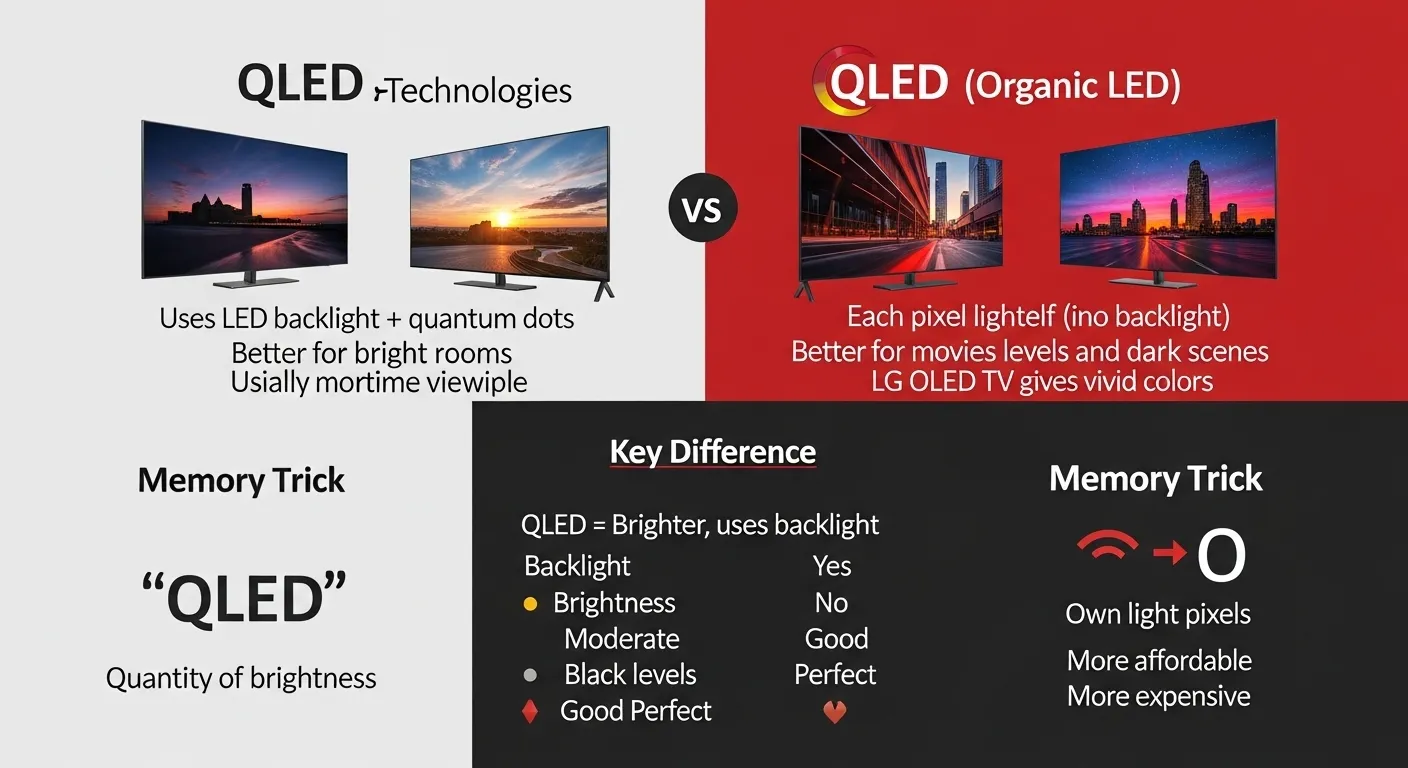
OLED is a display technology where each pixel produces its own light, while QLED is an LED based display that uses quantum dots for brighter colors.
In this guide, I will explain the difference between QLED or OLED and help you choose the right display for your needs.
Many people search for this keyword when buying a new TV because both technologies promise better picture quality. The confusion happens because both sound similar, but they work very differently.
I will break down the meaning, definition, origin, differences, real-life usage, and common mistakes related to QLED or OLED displays.
QLED or OLED : Quick Answer
Both QLED and OLED are modern display technologies used in TVs and monitors, but they function differently.
- QLED – Meaning: Quantum Dot Light Emitting Diode display.
- Definition: A type of LED-backlit LCD display that uses quantum dots to improve brightness and color.
- OLED – Meaning: Organic Light Emitting Diode display.
- Definition: A display where each pixel produces its own light without needing a backlight.
Examples:
- ✅ QLED TVs are very bright and colorful.
- ✅ OLED TVs offer deep blacks and high contrast.
In simple words, QLED improves brightness, while OLED improves contrast and picture depth.
The Origin of QLED or OLED
OLED technology was developed earlier and is based on organic compounds that emit light when electricity passes through them. It became popular for high-end displays due to its ability to turn pixels on and off individually.
QLED is a newer marketing term introduced by companies like Samsung. It builds on existing LED technology by adding a quantum dot layer to improve brightness and color accuracy.
Brands like LG are known for OLED TVs, while Samsung focuses heavily on QLED displays.
Today, both technologies compete in the premium TV market.
OLED vs QLED Technology Differences
These two technologies differ in how they produce light and display images.
Comparison Table
| Feature | QLED | OLED |
| Full Name | Quantum Dot LED | Organic LED |
| Light Source | LED backlight | Self-lighting pixels |
| Brightness | Very high | Moderate |
| Black Levels | Good | Perfect black |
| Thickness | Slightly thicker | Ultra-thin |
| Contrast | High | Extremely high |
OLED provides better contrast, while QLED offers higher brightness.
Which Display Should You Choose?
The right choice depends on how you use your screen.
Choose QLED If
- You watch TV in bright rooms
- You want very high brightness
- You prefer a lower price than OLED
Example:
- QLED TVs work well in living rooms with strong lighting.
Choose OLED If
- You want perfect black levels
- You watch movies in dark rooms
- You want the best picture quality
Example:
- OLED TVs are ideal for cinematic viewing.
Both options are excellent but serve different needs.
Common Mistakes with QLED or OLED
Thinking QLED and OLED Are the Same
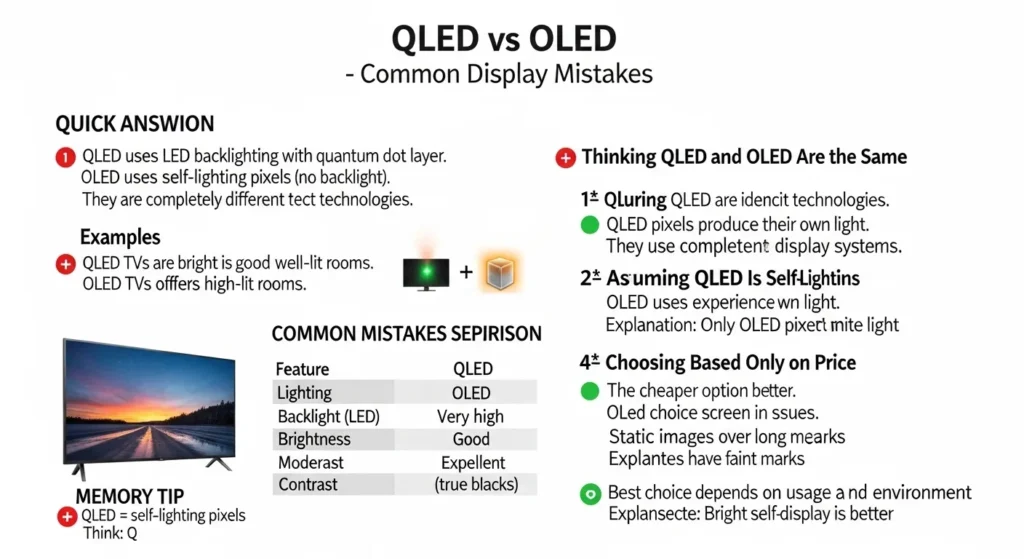
❌ QLED and OLED are identical technologies.
✅ They use completely different display systems.
Assuming QLED Is Self-Lighting
❌ QLED pixels produce their own light.
✅ QLED uses a backlight system.
Ignoring Burn-In Concerns
❌ OLED never has screen issues.
✅ OLED can experience burn-in in rare cases.
Choosing Based Only on Price
❌ The cheaper option is always better.
✅ The best choice depends on usage and environment.
Understanding these mistakes helps buyers make smarter decisions.
QLED and OLED in Everyday Examples 📧📰📱🧾
These examples show how people use this comparison in daily life.
Email Example 📧
“I’m confused between QLED or OLED for my new TV.”
News Example 📰
“Manufacturers are improving both QLED or OLED technologies for better displays.”
Social Media Example 📱
“Should I buy a QLED or OLED TV this year?”
Formal Writing Example 🧾
“The report compares QLED or OLED display performance in modern televisions.”
These examples show real-world usage.
OLED or QLED : Google Trends & Usage Data
Search interest for QLED or OLED has increased as more people upgrade to smart TVs.
Key trends:
- OLED is popular among movie lovers
- QLED is popular for bright environments
- Both technologies are widely searched worldwide
High search activity comes from:
- United States
- United Kingdom
- India
- Pakistan
- Canada
Consumers often compare these technologies before purchasing premium TVs.
Comparison Table : QLED vs OLED
| Display Type | Technology | Key Strength |
| QLED | LED + Quantum Dot | Brightness |
| OLED | Self-lighting pixels | Contrast |
This table highlights the core difference.
FAQs About QLED or OLED
1. What is QLED?
QLED is a display that uses quantum dots with LED backlighting.
2. What is OLED?
OLED is a display where each pixel produces its own light.
3. Which display is better for movies?
OLED is usually better for movies due to deep blacks and contrast.
4. Which display is brighter?
QLED displays are generally brighter.
5. Is OLED more expensive?
Yes, OLED TVs are often more expensive.
6. Can OLED screens burn in?
Yes, but it is rare with normal use.
7. Which display lasts longer?
Both technologies can last many years with proper usage.
Conclusion
The difference between QLED or OLED comes down to how each technology produces light and displays images. QLED is an advanced version of LED technology that uses quantum dots to improve brightness and color. It relies on a backlight system, which makes it ideal for bright rooms and everyday viewing. On the other hand, OLED uses self-lighting pixels, allowing each pixel to turn on and off independently. This creates perfect black levels, higher contrast, and a more immersive viewing experience.
Choosing between the two depends on your needs. If you watch TV in a bright room or want a more affordable option, QLED may be the better choice. If you prefer cinematic quality with deep blacks and rich contrast, OLED is usually the better option. Both technologies are powerful and continue to improve over time.
By understanding these differences, you can confidently choose between QLED or OLED and select the display that best matches your viewing habits and environment.

My name is Antonia White, and I’m an English writer who enjoys crafting thoughtful and engaging stories. I focus on clarity and depth in my writing, aiming to connect with readers through meaningful ideas and a genuine, approachable style.