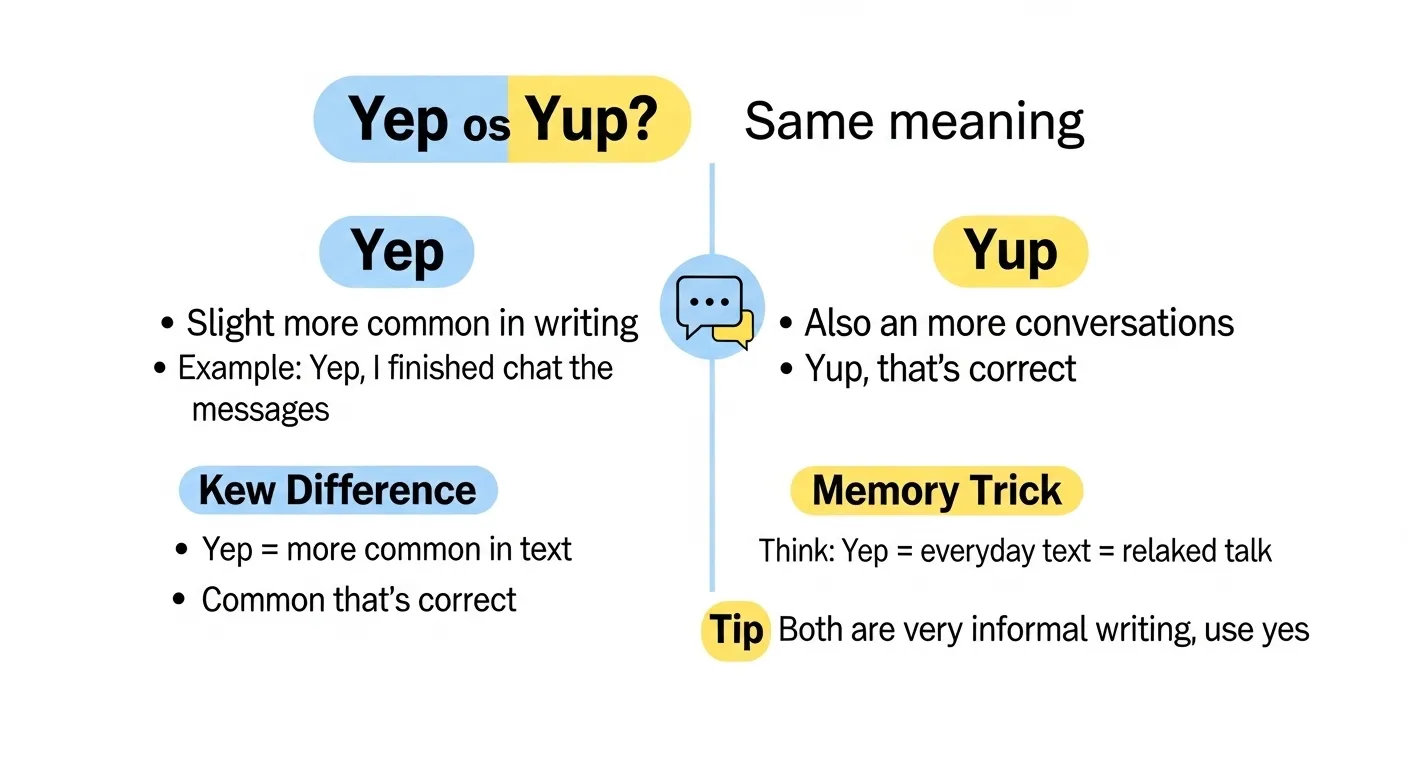
Both “yep” and “yup” are correct, but they are informal ways to say “yes.”
People often search for yep or yup because both words appear frequently in conversations, text messages, and social media. These words are not usually used in formal writing, but they are very common in everyday speech. They help express agreement, confirmation, or a relaxed response.
In this guide, you will learn the meaning, origin, usage differences, common mistakes, and examples of yep or yup, so you can understand when each one is used.
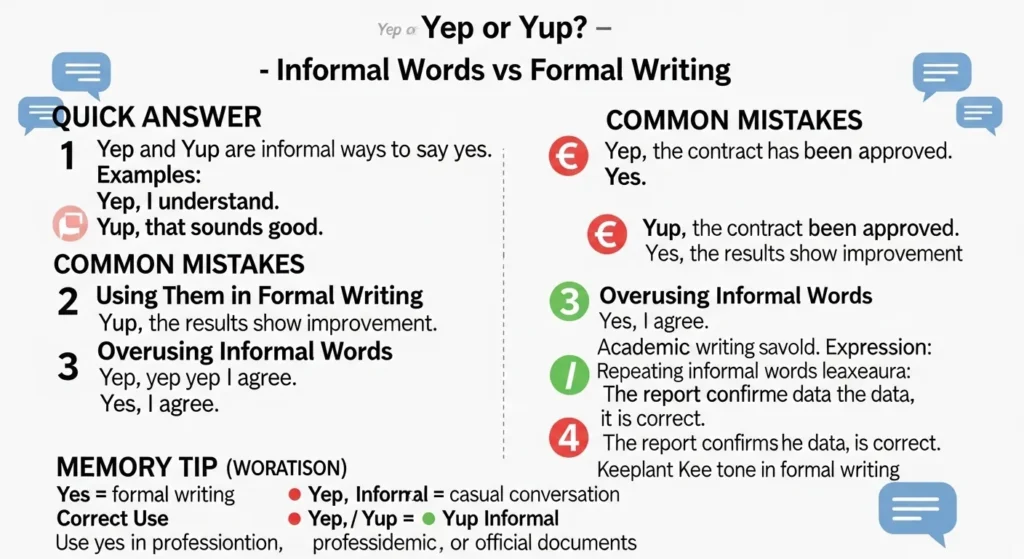
Yep or Yup : Quick Answer
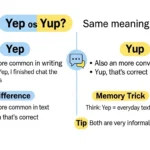
Both yep and yup mean the same thing: yes.
- Yep → Informal yes
- Yup → Informal yes
Examples:
- ✅ Yep, I finished the work.
- ✅ Yup, that’s correct.
- ❌ Yep, I accept the legal agreement. (Too informal for serious writing)
Both words are casual responses and should be used mainly in conversations.
The Origin of Yep or Yup
Both yep and yup developed as casual variations of the word yes.
English speakers often shorten words in speech to make conversation faster and more relaxed. Over time, people started saying:
- yeah
- yep
- yup
These forms became common in spoken English, especially in friendly or informal situations.
The words appeared widely in American English in the late 19th and early 20th centuries as conversational slang. They are now widely understood across English-speaking countries.
British English vs American English Usage
There is no strict spelling difference between British and American English for yep or yup. Both versions appear in both regions.
However, small preferences sometimes appear in casual speech.
| Word | Common Usage | Region |
| Yep | Slightly more common | US & UK |
| Yup | Common in conversation | US & UK |
Both words remain informal and are rarely used in professional writing.
Which Word Should You Use?
The choice between yep and yup usually depends on personal style or tone.
Use “Yep” When
- The tone is friendly
- The conversation is casual
- You want a slightly softer response
Example:
- Yep, I understand the instructions.
Use “Yup” When
- The response feels more relaxed
- You are replying quickly
- The conversation is informal
Example:
- Yup, that’s the right answer.
In most situations, both words are interchangeable.
Common Mistakes with Yep or Yup
Using Them in Formal Writing
❌ Yep, the contract has been approved.
✅ Yes, the contract has been approved.
Formal writing usually requires yes.
Using Them in Academic Work
❌ Yup, the results show improvement.
✅ Yes, the results show improvement.
Academic writing should avoid slang.
Overusing Informal Words
❌ Yep yep yep I agree.
✅ Yes, I agree.
Too many informal words reduce clarity.
Mixing Formal and Informal Tone
❌ The report confirms the data, yep it is correct.
✅ The report confirms the data; it is correct.
Maintain a consistent tone.
Yep and Yup in Everyday Examples 📧📰📱🧾
Here are examples of how these words appear in real life.
Text Message Example 📱
“Yep, I’ll be there at 7.”
Social Media Example 📱
“Yup, that movie was amazing!”
Casual Conversation Example
Friend: “Did you finish the project?”
You: “Yep.”
Informal Email Example 📧
“Yep, I received the file. Thanks.”
These examples show how the words appear in everyday communication.
Yup or Yep : Google Trends & Usage Data
Search patterns show that many English learners look for yep or yup because they hear these words in movies, television shows, and online conversations.
Interest is high in countries such as:
- United States
- United Kingdom
- India
- Pakistan
- Canada
The reason is simple: these words are common in spoken English but are rarely taught in traditional grammar lessons.
Because of this, many learners want to understand their meaning and correct usage.
Comparison Table : Yep or Yup
| Word | Correct? | Meaning |
| Yep | ✅ Yes | Informal way to say yes |
| Yup | ✅ Yes | Informal way to say yes |
| Yes | ✅ Yes | Standard and formal |
All three words mean agreement, but yes is the most formal.
FAQs About Yep or Yup
1. Are yep and yup the same?
Yes. Both words mean “yes.”
2. Which word is more common?
Both are common, but yep appears slightly more often in writing.
3. Can I use yep in professional writing?
No. It is better to use yes.
4. Is yup slang?
Yes. It is considered informal speech.
5. Do dictionaries include these words?
Yes. Most modern dictionaries include both yep and yup.
6. Are these words used worldwide?
Yes. They are understood in most English-speaking countries.
7. What is the formal alternative?
The formal word is yes.
Conclusion
The confusion between yep or yup is simple because both words mean the same thing. They are informal ways to say yes and are commonly used in casual conversations, text messages, and social media. These words developed naturally in spoken English as shorter and more relaxed responses.
Although yep and yup are widely understood, they are not usually appropriate for formal writing. Professional communication, academic papers, and official documents should use the standard word yes instead. Informal responses work well when speaking with friends or sending quick messages.
There is no major difference between British and American English for these words. Both forms appear in everyday conversation across many English-speaking countries. The choice between yep and yup often depends on personal preference or the tone of the conversation.
Understanding these small differences helps improve communication and ensures that the tone of your writing matches the situation. Now you can confidently decide when to use yep, yup, or the more formal yes.

My name is Antonia White, and I’m an English writer who enjoys crafting thoughtful and engaging stories. I focus on clarity and depth in my writing, aiming to connect with readers through meaningful ideas and a genuine, approachable style.