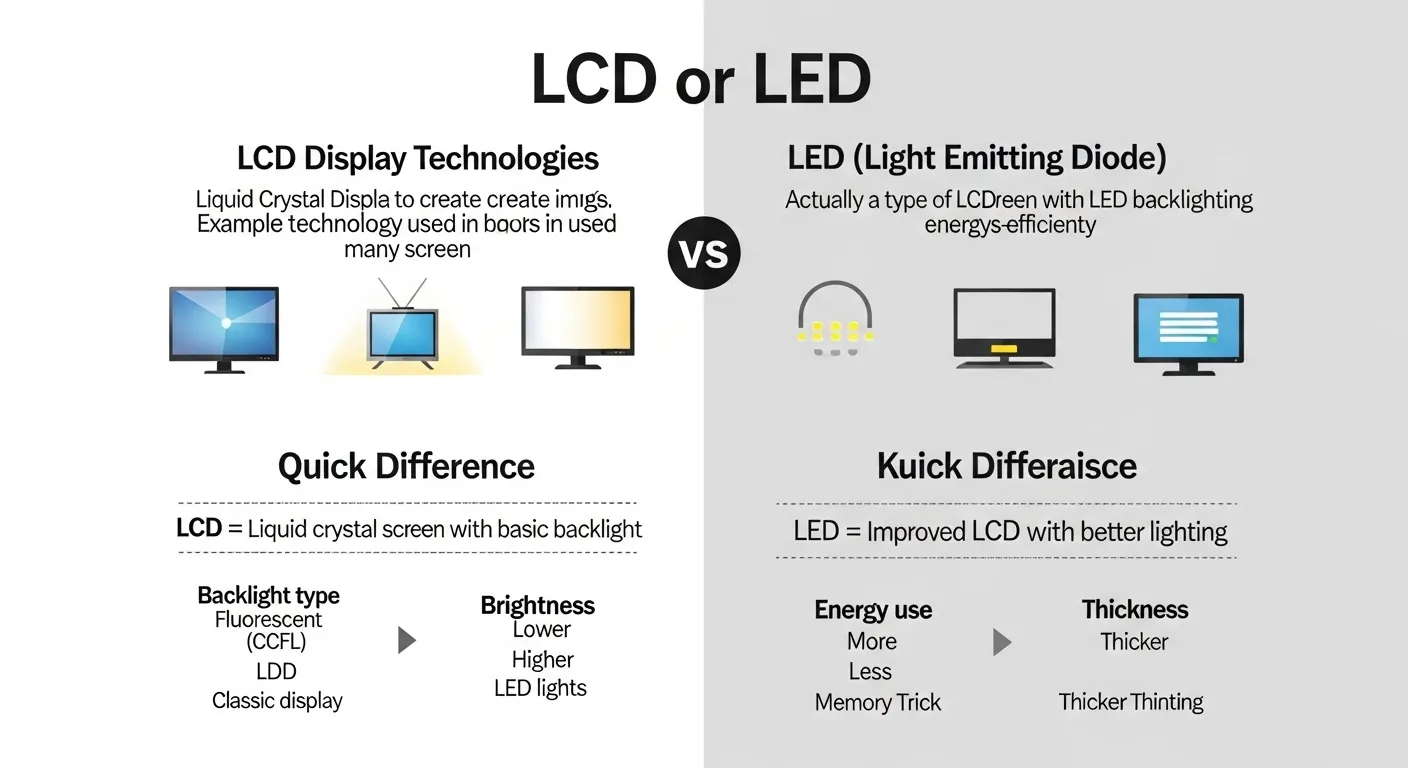
LCD is a display technology that uses liquid crystals, while LED is a type of LCD display that uses light-emitting diodes for backlighting.
In this guide, I will explain the difference between LCD or LED and help you understand which display technology is better for your needs.
Many people search for this comparison when buying televisions, monitors, or laptops because both terms appear in product descriptions. The confusion happens because LED screens are actually a type of LCD display, but they use a different lighting system.
I will show you the meaning, origin, differences, examples, advantages, and common mistakes related to LCD or LED displays.
LCD or LED : Quick Answer
Both LCD and LED are display technologies used in televisions, computer monitors, and other screens.
- LCD – Meaning: Liquid Crystal Display.
- Definition: A screen that uses liquid crystals and a backlight to produce images.
- LED – Meaning: Light Emitting Diode display (a type of LCD).
- Definition: An LCD screen that uses LED lights for backlighting instead of older fluorescent lights.
Examples:
- ✅ Many older TVs use LCD screens.
- ✅ Modern TVs often use LED displays.
In simple terms, LED displays are an improved version of LCD displays.
The Origin of LCD or LED Technology
Display technology has evolved over several decades.
LCD technology started gaining popularity in the 1970s and 1980s, especially in calculators and digital watches. Later, LCD screens became common in televisions and computer monitors.
LED technology improved LCD displays by replacing fluorescent backlights with light-emitting diodes. This change allowed screens to become thinner, brighter, and more energy efficient.
Many modern televisions from companies like Samsung and LG use LED display technology.
Today, LED-backlit LCD screens dominate the consumer electronics market.
LED vs LCD Technology Differences
Although both technologies are closely related, they have some key differences.
Comparison Table
| Feature | LCD | LED |
| Full Name | Liquid Crystal Display | Light Emitting Diode |
| Backlight | Fluorescent lamps | LED lights |
| Thickness | Thicker screens | Thinner screens |
| Energy Use | Higher energy consumption | More energy efficient |
| Picture Quality | Good | Usually brighter and sharper |
LED displays generally provide better performance and efficiency.
Which Display Should You Choose?
The best option depends on your needs and budget.
Choose LCD If
- You want a lower price
- You are buying an older or basic monitor
- High brightness is not necessary
Example:
- Basic office monitors sometimes use LCD screens.
Choose LED If
- You want better brightness
- You want thinner screens
- You prefer energy efficiency
- You want improved picture quality
Example:
- Most modern televisions use LED displays.
Because of these advantages, LED displays are now more common.
Common Mistakes with LCD or LED
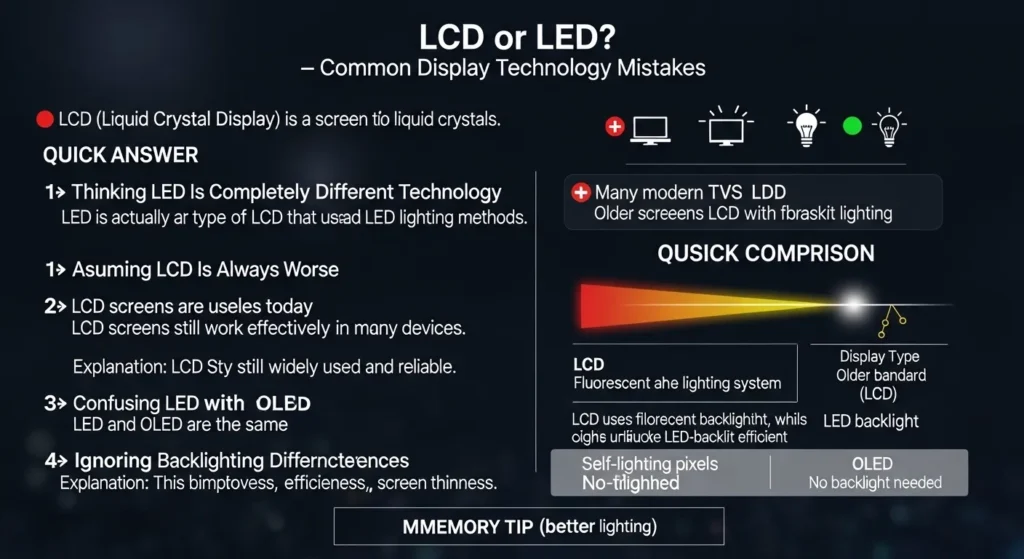
Thinking LED Is Completely Different Technology
❌ LED is not related to LCD.
✅ LED is actually a type of LCD display.
Many people misunderstand this difference.
Assuming LCD Is Always Worse
❌ LCD screens are useless today.
✅ LCD screens still work well in many devices.
The technology still functions effectively.
Confusing LED with OLED
❌ LED and OLED are the same.
✅ OLED is a different display technology.
OLED screens work differently from LED-backlit LCD displays.
Ignoring Backlighting Differences
❌ LCD and LED use the same lighting system.
✅ LCD uses fluorescent lights, while LED uses diode lighting.
Understanding this difference explains the performance improvements.
LED or LCD in Everyday Examples 📧📰📱🧾
Here are examples showing how the terms appear in daily conversations.
Email Example 📧
“I’m comparing LCD or LED monitors before buying a new computer screen.”
News Example 📰
“Manufacturers are producing more LED TVs than traditional LCD models.”
Social Media Example 📱
“Should I buy an LCD or LED TV for my living room?”
Formal Writing Example 🧾
“The study compared LCD or LED displays for energy efficiency.”
These examples show how people discuss display technology in everyday situations.
LCD and LED : Google Trends & Usage Data
Search interest for LCD or LED often increases when consumers plan to purchase new televisions or monitors.
People frequently search this comparison because product descriptions often highlight LED displays as a feature.
Countries with strong search activity include:
- United States
- United Kingdom
- India
- Pakistan
- Canada
In the modern electronics market, LED displays have become more common than traditional LCD screens because they offer better brightness, thinner designs, and improved energy efficiency.
Comparison Table : LCD vs LED
| Display Type | Technology | Lighting Method |
| LCD | Liquid crystal display | Fluorescent backlight |
| LED | LED-backlit LCD display | Light-emitting diode backlight |
This table highlights the main technical difference.
FAQs About LCD or LED
1. What does LCD stand for?
LCD stands for Liquid Crystal Display.
2. What does LED stand for?
LED stands for Light Emitting Diode.
3. Is LED better than LCD?
LED displays are usually brighter and more energy efficient.
4. Are LED TVs actually LCD TVs?
Yes. Most LED TVs are LCD screens with LED backlighting.
5. Which display lasts longer?
Both technologies can last many years with normal use.
6. Are LED screens thinner?
Yes. LED backlighting allows thinner designs.
7. Which display is more energy efficient?
LED displays generally use less electricity.
Conclusion
Understanding the difference between LCD or LED displays helps consumers make better decisions when buying televisions, monitors, or other electronic devices. LCD stands for Liquid Crystal Display and uses liquid crystals along with a backlight to produce images on the screen. LED displays, on the other hand, are actually an improved type of LCD display that uses light-emitting diodes for backlighting instead of fluorescent lamps.
This change in lighting technology allows LED screens to be thinner, brighter, and more energy efficient. Because of these advantages, LED displays have largely replaced traditional LCD displays in modern electronics. However, both technologies still operate on the same basic principle of liquid crystal display systems.
When choosing between LCD and LED, most buyers prefer LED displays because they offer better picture quality and energy efficiency. Still, LCD screens can remain a cost-effective option for basic devices. Understanding these differences ensures that consumers can confidently select the display technology that best fits their needs.

I’m Elizabeth von Arnim, an English writer with a passion for thoughtful storytelling. I focus on crafting engaging and meaningful content, paying attention to the little details that bring ideas and characters to life. My goal is to connect with readers through clear, approachable, and timeless writing.