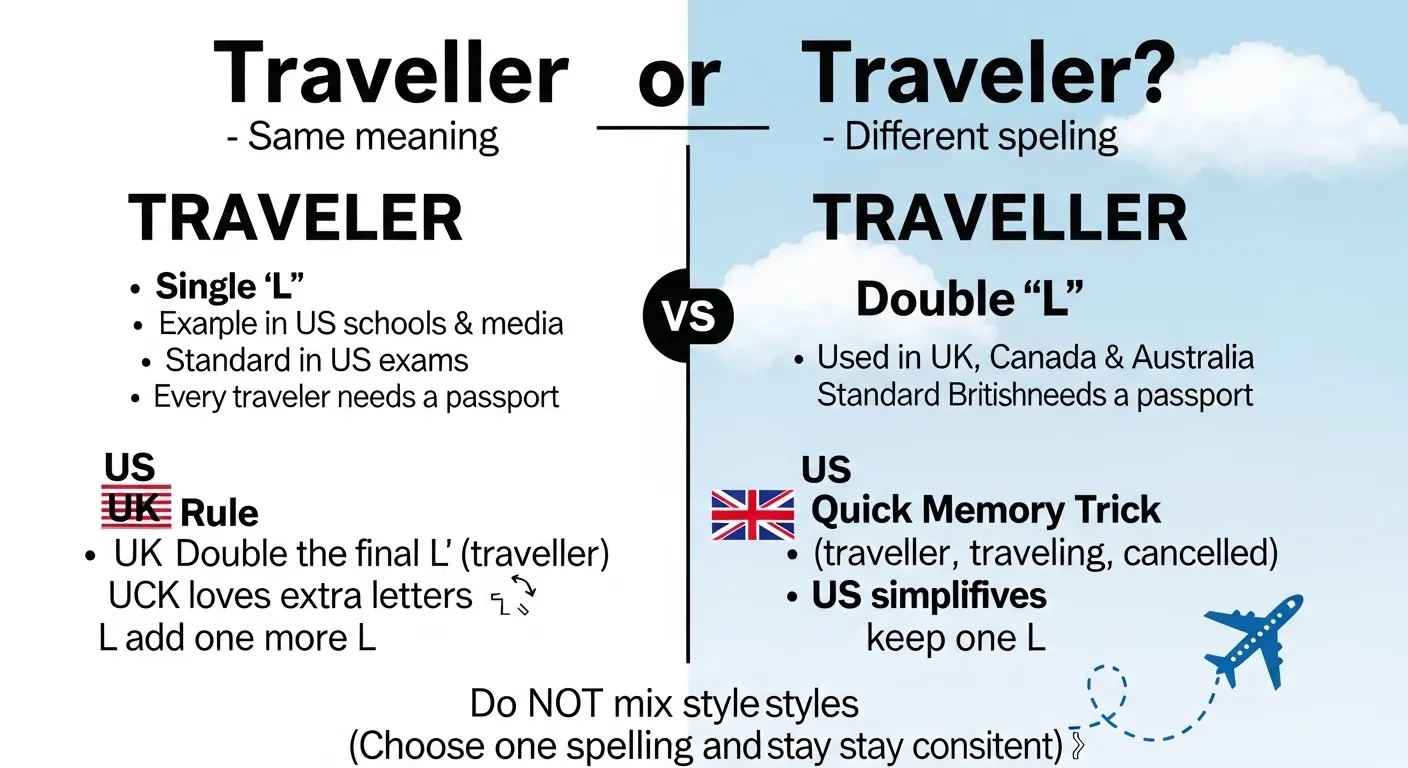
Traveller or traveler? Both are correct. “Traveler” is American English, and “traveller” is British English.
I remember booking a flight and filling out a form that said traveler information. Later, I read a UK travel blog that used traveller stories. I paused and thought, which one is right?
Many people search “traveller or traveler” because they see both spellings online. The confusion comes from British and American spelling rules. The good news is simple: the meaning is the same.
In this guide, I will clearly explain the difference, origin, usage, and which spelling you should use.
Traveller or Traveler: Quick Answer ✅

The word means a person who travels from one place to another.
- 🇺🇸 Traveler → American English
- 🇬🇧 Traveller → British English
The difference is the double “l.”
Examples:
- The traveler lost his passport. (US)
- The traveller lost his passport. (UK)
The pronunciation and meaning are the same.
The Origin of Traveller and Traveler 📜
The word comes from the verb travel.
In British English, when adding -er to verbs that end in a vowel + consonant, the final consonant is often doubled.
So:
- travel → traveller
- cancel → canceller
- fuel → fueller
American English simplified many spellings. Influenced by Noah Webster, the US often avoids doubling the final consonant in some words.
So in American English:
- travel → traveler
- cancel → canceler
- fuel → fueler
That is why the spelling differs.
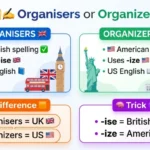
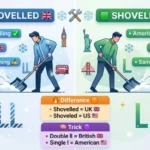
British English vs American English Spelling 🇬🇧🇺🇸
British English usually doubles the final “l.”
American English often keeps a single “l.”
Comparison Table of Traveller vs Traveler
| British English | American English |
| Traveller | Traveler |
| Cancelled | Canceled |
| Travelling | Traveling |
| Labelled | Labeled |
| Jewellery | Jewelry |
This pattern is common in many words.
Which Spelling Should You Use? 🎯
Choose based on your audience.
- 🇺🇸 Writing for US → Use traveler
- 🇬🇧 Writing for UK → Use traveller
- 🇨🇦 Canada & 🇦🇺 Australia → Usually traveller
- 🌍 Global writing → Pick one style and stay consistent
If you write for an American company, use American spelling.
If you write for British readers, use British spelling.
Never mix both styles in the same document.
Common Mistakes with Traveller or Traveler ❌
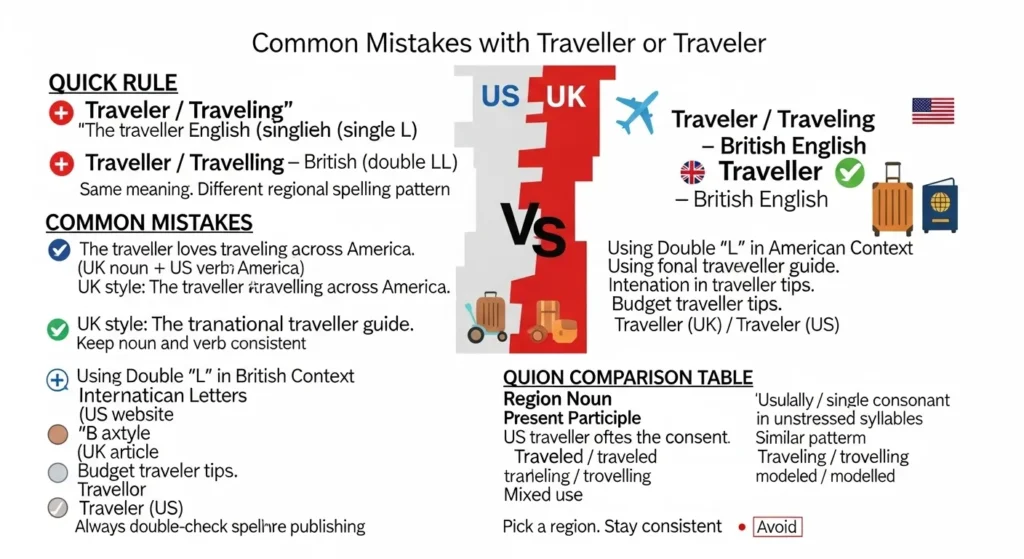
Mixing Single and Double “L”
❌ Wrong: The traveller loves traveling across America.
(UK noun + US verb form mixed)
✅ Correct (UK style): The traveller loves travelling across America.
✅ Correct (US style): The traveler loves traveling across America.
Using Double “L” in American Context
❌ Wrong (US website): International traveller guide.
✅ Correct: International traveler guide.
Using Single “L” in British Context
❌ Wrong (UK article): Budget traveler tips.
✅ Correct: Budget traveller tips.
Adding Extra Letters
❌ Wrong: Travellor
❌ Wrong: Travelor
✅ Correct: Traveller (UK) / Traveler (US)
Traveler or Traveller in Everyday Examples 📧📰📱🧾
Here is how the word appears in daily life.
US Style:
Every traveler must carry valid identification.
UK Style:
Every traveller must carry valid identification.
📰 News
- The traveler was rescued from the mountain. (US news)
- The traveller was rescued from the mountain. (UK news)
📱 Social Media
- Solo traveler life is amazing!
- Proud to be a world traveller!
🧾 Formal Writing
- Insurance coverage is required for each traveler.
- Insurance coverage is required for each traveller.
Both are correct depending on region.
Traveller or Traveler Which Is Correct? Regional Usage Explained
Many people search traveller or traveler which is correct because both spellings appear online and in professional writing. The answer depends on location.
In British English, traveller uk spelling follows the traditional rule of doubling the final “l.” Meanwhile, American English prefers the simplified spelling.
People often ask traveller or traveler canada because Canadian English usually follows British spelling patterns, although style guides may differ.
Another common search is traveler or traveller which one is correct. The truth is simple: both are correct when matched to the right audience and spelling system.
Some users also search traveler traveller and traveller traveler while comparing spelling differences or checking regional writing rules.
Traveller Spelling and Correct Usage in British and American English
Many learners search traveller spelling and traveler spelling because both versions appear in travel websites, forms, and international writing.
One common question is traveller correct spelling. The answer depends on region. British English traditionally uses traveller with a double “l,” while American English prefers traveler with a single “l.”
People also ask traveller or traveler uk when writing for British readers. In UK English, traveller is generally the preferred form.
Another related query is traveler in british english. British writing usually keeps the double “l,” so traveller is more common in newspapers, travel guides, and formal communication.
Writers often search traveler or traveller meaning to confirm whether the two words describe different things. In reality, both refer to a person who travels from one place to another.
Spelling questions remain very common online. Searches such as how to spell traveler, spell traveler, and spelling of traveller and traveler correct spelling usually come from learners trying to match the correct spelling with their audience.
The easiest rule is simple: both spellings are correct, but consistency matters more than choosing one over the other.
Traveler and Traveller Plural Forms, Meaning and Spelling Variations
Plural spelling creates another layer of confusion. Many learners search travelers or travellers and travellers or travelers when writing blogs, travel documents, or academic work.
Some users also check travellers spelling and travelers spelling to confirm which version matches their region.
Language learners may search traveler meaning while trying to understand the exact definition and usage of the word in different contexts.
Global searches create even more variations. Queries such as traveler atau traveller and traveler of traveller often appear when users compare spelling systems or translate English writing rules.
The simplest approach is to choose one language style and remain consistent throughout your writing.
Traveler and Traveller: Google Trends & Usage Data 📊

Search data shows:
- 🇺🇸 United States → “traveler” is more popular.
- 🇬🇧 United Kingdom → “traveller” dominates.
- 🇨🇦 Canada → Often uses “traveller.”
- 🇦🇺 Australia → Mostly “traveller.”
Online travel booking websites in the US prefer traveler information. UK government websites use traveller guidance.
The spelling clearly follows regional education systems.
Side by Side Comparison Table of Traveler vs Traveller📌
| Feature | Traveller | Traveler |
| Region | UK, Canada, Australia | United States |
| Double “L” | Yes | No |
| Meaning | Same | Same |
| Pronunciation | Same | Same |
| Formal Usage | Correct in UK | Correct in US |
There is no difference in meaning.
Frequently Asked Questions (FAQs) ❓
1. Is traveller wrong?
No. It is correct in British English.
2. Is traveler wrong?
No. It is correct in American English.
3. Why does British English double the “l”?
Because of traditional spelling rules when adding suffixes.
4. Which spelling is more common worldwide?
British spelling is common in many countries, but American spelling dominates US websites.
5. Do they sound different?
No. The pronunciation is the same.
6. What about Canada?
Canada usually prefers British spelling, so traveller is common.
7. Can I use either one?
Yes, but stay consistent in one document.
Conclusion 🏁
So, traveller or traveler? Both are correct. The difference depends on region. American English uses traveler with one “l.” British English uses traveller with two “l’s.” The meaning stays exactly the same.
I learned that spelling consistency is very important. If you mix British and American styles, your writing can look careless. Always think about your audience first. Then choose one spelling style and follow it everywhere.
This spelling difference exists because American English simplified some traditional British rules. Since then, both forms have become standard in their regions.
Now you can write confidently. If you are booking a flight, writing a blog, or filling out a visa form, you will know exactly which spelling to use.
Discover More Articles:

My name is Arthur Machen, and I am an English writer with a strong interest in language, ideas, and thoughtful storytelling. I enjoy writing content that feels natural, meaningful, and engaging, with a focus on clarity, depth, and a genuine connection with readers.