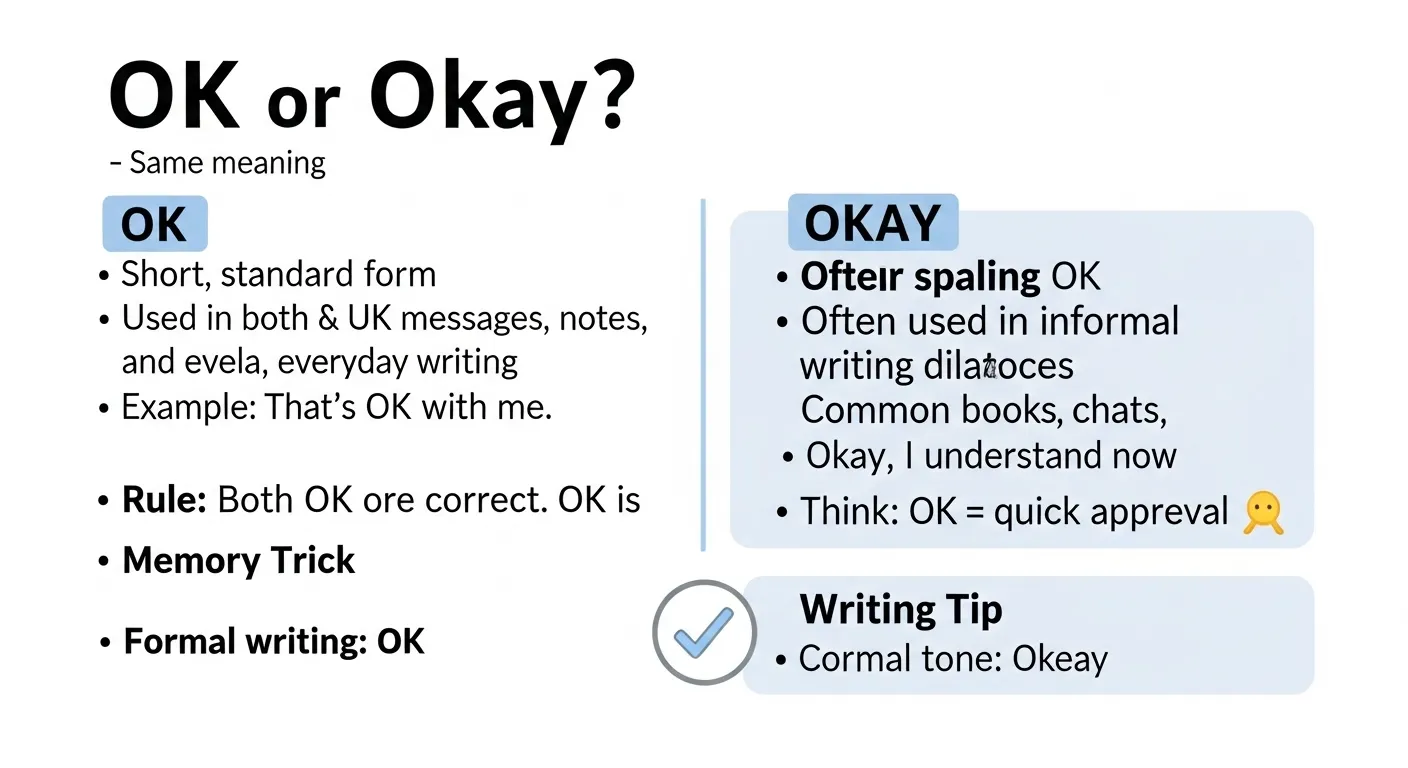
Both “ok” and “okay” are correct, but “okay” is considered the more formal and complete spelling.
People often search for ok or okay because both versions appear everywhere in text messages, emails, books, and social media. Sometimes you see OK, sometimes ok, and sometimes okay.
This creates confusion about which one is the correct form. The truth is that all of these forms exist, but they are used in slightly different situations. Some writers prefer the full word okay in formal writing, while ok is very common in casual communication.
In this guide, you will learn the meaning, origin, spelling differences, usage rules, common mistakes, and examples of ok or okay, so you can choose the right form confidently.
Ok or Okay : Quick Answer
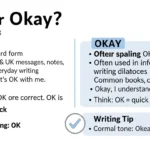
Both spellings are correct, but they are used differently depending on the situation.
- OK / Ok → Short form, very common in messages and casual writing
- Okay → Full word, often used in formal or standard writing
Examples:
- ✅ OK, I understand the instructions.
- ✅ Okay, I will send the report tomorrow.
- ✅ Is everything OK?
All three versions appear in modern English, but okay is usually considered the safest choice in professional writing.
The Origin of Ok or Okay
The word OK has a very unusual history.
It started in the United States in the 1830s as a humorous abbreviation. At that time, people enjoyed creating funny shortened spellings. One phrase used was “oll korrect,” which was a playful misspelling of “all correct.”
“Oll korrect” was shortened to OK.
Later, the word became extremely popular when it was used in a political campaign in 1840 for American president Martin Van Buren. His supporters used the nickname “Old Kinderhook,” and they used OK as a campaign slogan.
Because of this publicity, the word spread quickly across the United States and eventually the entire world.
Over time, the spelling “okay” developed as a written-out version of OK.
British English vs American English Spelling
There is no strict regional rule between British and American English for ok or okay. Both countries use both forms.
However, usage patterns show small differences.
| Spelling | Usage | Region |
| OK | Very common in both | US & UK |
| Ok | Informal style | US & UK |
| Okay | Often used in writing | US & UK |
Most modern style guides say OK or okay are acceptable. Some editors prefer okay because it looks more like a normal word.
Which Spelling Should You Use?
The best choice depends on the situation.
Use okay when writing:
- Essays
- Articles
- Reports
- Professional emails
Example:
- Okay, I will review the document today.
Use OK or ok when writing:
- Text messages
- Social media posts
- Casual chats
Example:
- OK see you later.
Many professional writers choose okay because it feels more complete and natural in sentences.
Simple tip:
If the writing is formal, choose okay.
Common Mistakes with Ok or Okay
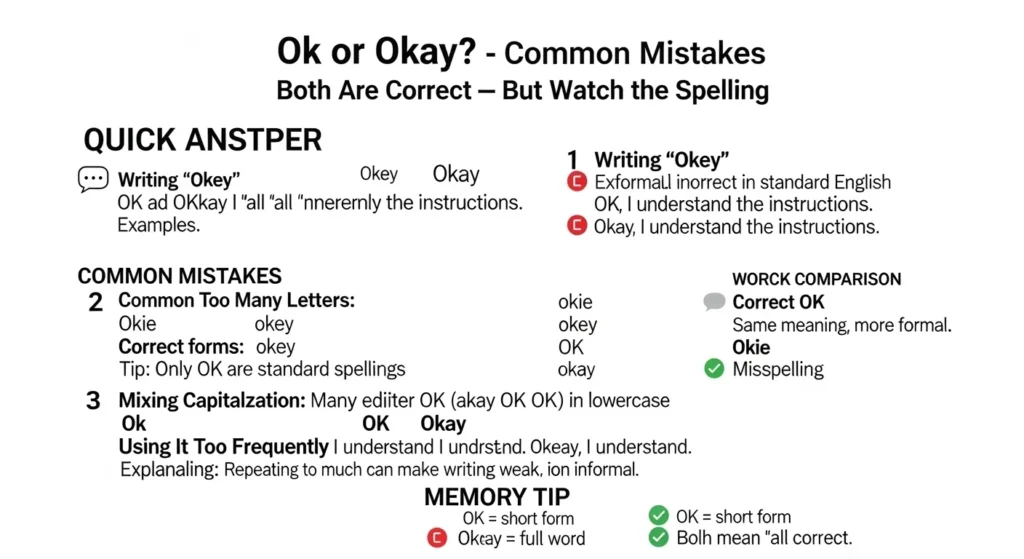
Writing “Okey”
❌ Okey
✅ Okay
The spelling okey is incorrect.
Using Too Many Letters
❌ Okie
✅ Ok / Okay
Extra letters create spelling errors.
Mixing Capitalization
❌ Ok
✅ OK or okay
Many editors prefer OK (all caps) or okay.
Using It Too Frequently
❌ Okay okay okay I understand.
✅ Okay, I understand.
Repeating the word too much can make writing look weak.
Ok or Okay in Everyday Examples 📧📰📱🧾
Here are common situations where the word appears.
Email Example 📧
“Okay, I will send the files this afternoon.”
News Example 📰
“The situation is now OK after repairs.”
Social Media Example 📱
“Everything is okay now.”
Formal Writing Example 🧾
“The results were considered okay for the first stage of testing.”
This shows that both spellings appear in everyday communication.
Okay or Ok : Google Trends & Usage Data
Search data shows that OK is one of the most recognized words in the world.
The word appears billions of times in:
- text messages
- social media posts
- emails
- books and articles
Interest in ok or okay searches often comes from students and writers who want to know which spelling looks more professional.
Countries with high search activity include:
- United States
- United Kingdom
- India
- Pakistan
- Canada
Because the word is used in almost every language today, many people want to understand the correct spelling.
Comparison Table : Ok vs Okay
| Word | Correct? | Usage |
| OK | ✅ Yes | Short form |
| Ok | ✅ Yes | Informal |
| Okay | ✅ Yes | Full word |
| Okey | ❌ No | Incorrect spelling |
The safest choice for clear writing is okay.
FAQs About Ok or Okay
1. Is ok a real word?
Yes. It is a widely accepted abbreviation meaning “all correct” or “fine.”
2. Is okay more correct than ok?
Not exactly. Both are correct, but okay is often preferred in formal writing.
3. Which spelling is most common?
OK is extremely common in everyday communication.
4. Can I use ok in professional emails?
Yes, but many writers prefer okay because it looks more formal.
5. Why is OK sometimes written in capital letters?
The original abbreviation used capital letters, so OK remains very common.
6. Is “okey” correct?
No. That spelling is incorrect.
7. Is okay used in dictionaries?
Yes. Most major dictionaries include both OK and okay.
Conclusion
The confusion between ok or okay happens because both forms are widely used in English. The abbreviation OK started in the United States in the nineteenth century as a humorous version of the phrase “all correct.” Over time, the word became extremely popular and spread around the world. Later, the spelling okay developed as a full written form of the abbreviation.
Today, both spellings are accepted in English. OK and ok are common in informal writing, text messages, and quick responses. The word okay is often preferred in formal writing because it looks like a standard English word and fits smoothly into sentences.
There is no difference between British and American English for these spellings, and both forms appear in books, news, and everyday communication. The most important thing is to choose a style that matches your situation. If you want the safest and most professional option, okay is usually the best choice.
Once you understand the history and usage of ok or okay, it becomes easy to select the right spelling for emails, conversations, and formal documents.

I’m Elizabeth von Arnim, an English writer with a passion for thoughtful storytelling. I focus on crafting engaging and meaningful content, paying attention to the little details that bring ideas and characters to life. My goal is to connect with readers through clear, approachable, and timeless writing.