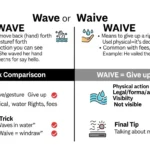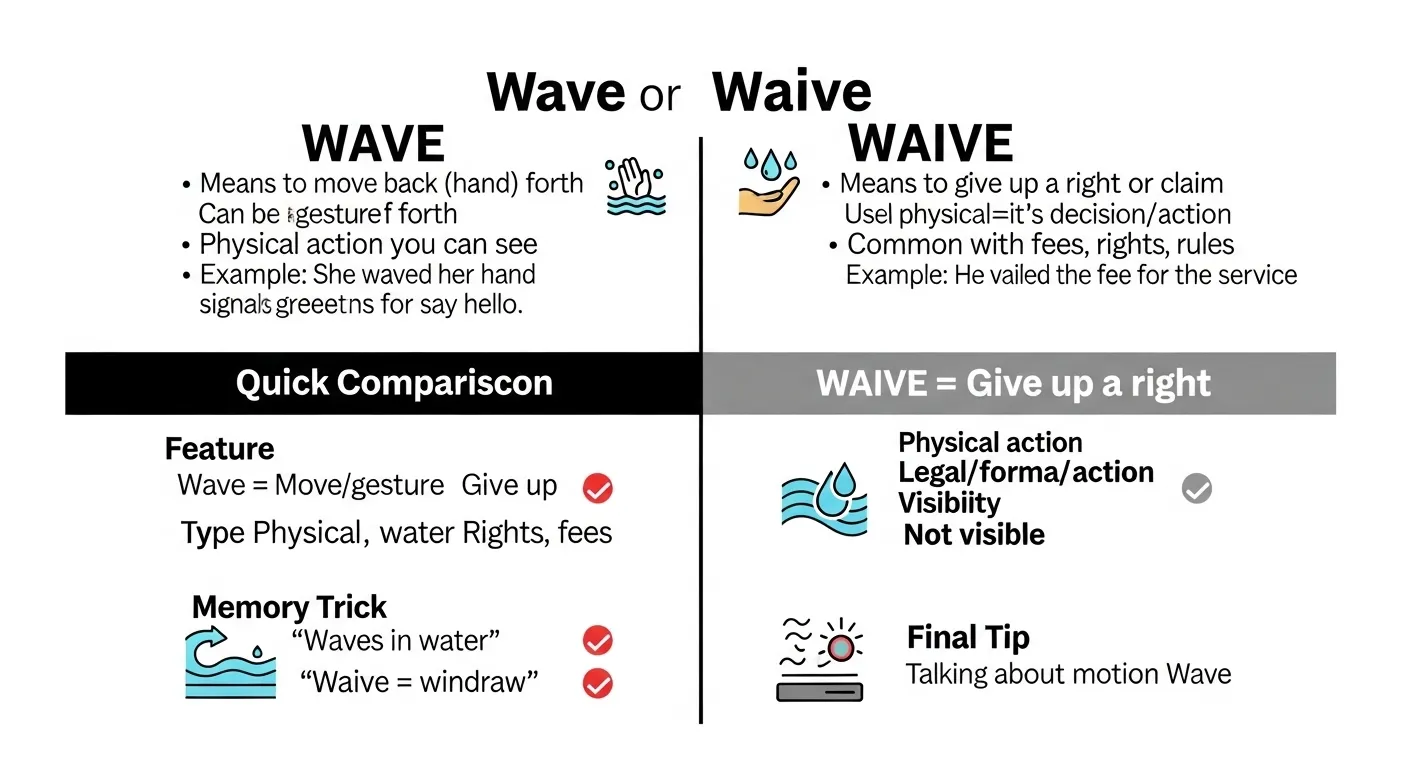
“Wave” means a movement or signal, while “waive” means to give up or cancel a right or rule.
I often see people confused about wave or waive because both words sound the same but have very different meanings.
Many search this keyword while writing emails, formal documents, or messages and want to avoid mistakes.
The confusion happens due to pronunciation, as both are homophones. In this guide, I will explain meanings, definitions, origin, differences, usage, and common mistakes related to wave or waive, so you can use them correctly.
Wave or Waive : Quick Answer
Both wave and waive sound alike but have different meanings and uses.
- Wave Meaning: A motion or gesture.
- Definition: A movement of the hand, water, or something that rises and falls.
- Waive Meaning: To give up or cancel.
- Definition: To choose not to enforce a rule, right, or requirement.
Examples:
- She gave a friendly wave.
- The company decided to waive the fee.
👉 In simple words: wave = movement, while waive = give up.
The Origin of Wave and Waive
The word wave comes from Old English wafian, meaning to move back and forth.
The word waive comes from Old French wever, meaning to abandon or give up.
Over time:
- Wave stayed related to motion and signals
- Waive developed a legal and formal meaning of giving up rights
Even though they sound the same today, their origins are different.
British English vs American English Spelling
There is no spelling difference between British and American English for these words.
Comparison Table
| Word | Type | Meaning |
| Wave | Verb/Noun | Movement or signal |
| Waive | Verb | Give up a right |
👉 This is a meaning difference, not a regional spelling issue.
Which Spelling Should You Use?
Choose based on the meaning of your sentence.
Use Wave If
- You are talking about motion or gesture
- You describe water movement
Use Waive If
- You mean cancel or give up
- You refer to rules, fees, or rights
👉 Always check context before writing.
Common Mistakes with Wave or Waive
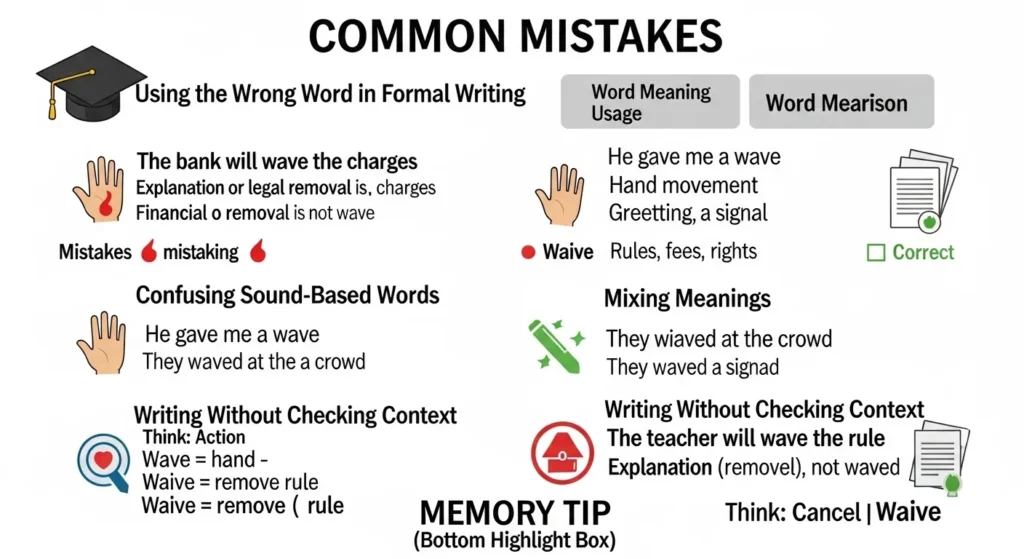
Using the Wrong Word in Formal Writing
❌ The bank will wave the charges
✅ The bank will waive the charges
Confusing Sound-Based Words
❌ He gave me a waive
✅ He gave me a wave
Mixing Meanings
❌ They waived at the crowd
✅ They waved at the crowd
Writing Without Checking Context
❌ The teacher will wave the rule
✅ The teacher will waive the rule
Waive or Wave in Everyday Examples 📧📰📱🧾
Here is how people use wave or waive in daily life.
Email Example 📧
“Can you waive the fee? I will wave when I arrive.”
News Example 📰
“The company chose to waive penalties after the storm wave damage.”
Social Media Example 📱
“He gave a wave while asking them to waive the charges.”
Formal Writing Example 🧾
“The authority may waive the requirement after reviewing the wave patterns.”
Wave or Waive : Google Trends & Usage Data
Search interest in wave or waive is steady due to confusion in writing.
Key insights:
- Common among students and professionals
- Frequently searched for grammar clarity
- Used in both casual and formal contexts
Popular regions include:
- United States
- United Kingdom
- India
- Pakistan
👉 People search this to avoid writing errors.
Comparison Table : Wave vs Waive
| Feature | Wave | Waive |
| Meaning | Movement | Cancel |
| Usage | Gesture or water | Rules and rights |
| Part of Speech | Noun/Verb | Verb |
| Example | Wave hello | Waive a fee |
FAQs About Wave or Waive
1. What is the difference between wave and waive?
Wave means movement, while waive means to give up a right.
2. Are wave and waive pronounced the same?
Yes, both sound the same.
3. Which word is used for canceling fees?
Waive is used for canceling fees.
4. Can wave be used as a noun?
Yes, wave can be a noun and a verb.
5. Is waive used in formal writing?
Yes, it is common in legal and formal contexts.
6. Why do people confuse them?
Because they sound identical.
7. How can I remember the difference?
Wave is for motion, while waive is for giving up something.
Conclusion
Understanding the difference between wave or waive is important for clear and correct communication.
Even though both words sound the same, they have completely different meanings. “Wave” is used when talking about movement, such as a hand gesture or water motion. “Waive,” on the other hand, is used in formal situations when you are giving up a right, rule, or fee.
This confusion is very common because English has many homophones. The best way to avoid mistakes is to focus on the meaning of your sentence.
If the sentence involves motion or greeting, use “wave.” If it involves canceling or allowing something to be skipped, use “waive.”
With practice, you will easily recognize the correct word. Using the right term will improve your writing and make your message clear and professional.
By mastering wave or waive, you can avoid common errors and communicate more effectively in both casual and formal situations.
Discover More Articles:

My name is Antonia White, and I’m an English writer who enjoys crafting thoughtful and engaging stories. I focus on clarity and depth in my writing, aiming to connect with readers through meaningful ideas and a genuine, approachable style.