Both “yea” and “yeah” are correct, but they are used in very different situations.
Many people search for yea or yeah because both words sound similar to “yes.” They do not mean the same thing in everyday English. The word yeah is a casual way to say “yes” in conversations, while yea is mostly used in formal voting or historical language. Because they sound alike, writers sometimes mix them up in messages, social media posts, or online comments.
In this guide, you will learn the meanings, origins, usage differences, common mistakes, everyday examples, and tips to remember the correct form of yea or yeah.
Yea or Yeah : Quick Answer
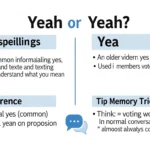
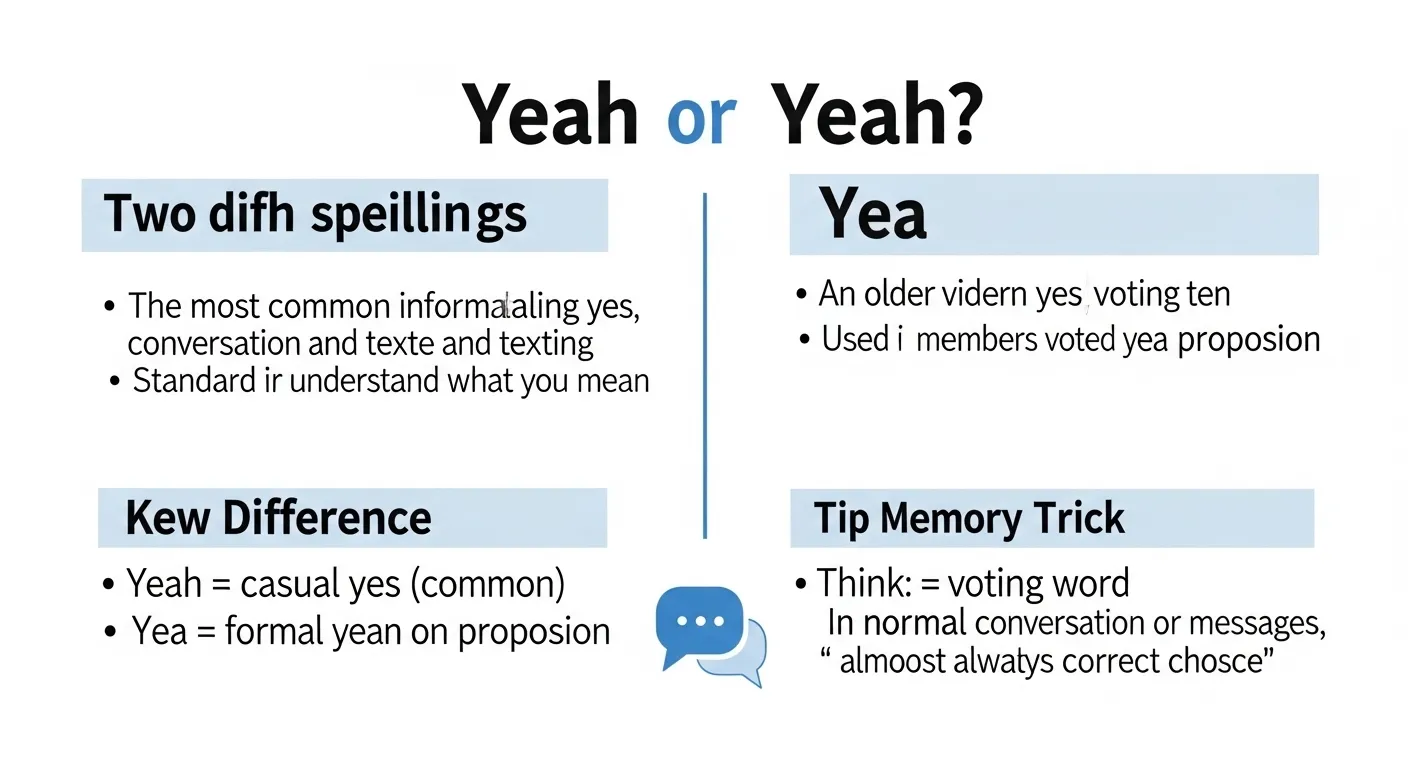
Both words are correct, but they have different meanings.
- Yeah → Informal way to say yes
- Yea → Formal voting word meaning yes
Examples:
- ✅ Yeah, I understand the instructions.
- ✅ The members voted yea on the proposal.
- ❌ Yea, I understand the instructions.
So the everyday answer is simple:
Use yeah in normal conversations.
The Origin of Yea or Yeah
The word yea is very old. It comes from Old English, where it meant “yes” or agreement.” In early English texts and speeches, people often used yea when expressing approval or support.
The word yeah developed later as a casual spoken form of yes. Over time, it became popular in everyday speech, especially in relaxed conversations.
Today:
- Yea appears mainly in formal voting language.
- Yeah appears in daily conversation.
Because they sound similar, confusion is common.
British English vs American English Usage
There is no major spelling difference between British and American English for yea or yeah. Both countries use the same forms.
However, their usage follows the same pattern.
| Word | Meaning | Usage |
| Yeah | Informal yes | US & UK |
| Yea | Formal vote meaning yes | US & UK |
For example, in government voting, the result may be recorded as:
- “The motion passed with twenty votes yea and five votes nay.”
In normal conversation, people say:
- “Yeah, that sounds good.”
Which Word Should You Use?
The correct choice depends on context.
Use “Yeah” When
- Speaking casually
- Sending text messages
- Talking with friends
- Writing informal dialogue
Example:
- Yeah, I saw that movie.
Use “Yea” When
- Describing formal voting
- Reading historical texts
- Writing about parliamentary decisions
Example:
- The committee voted yea to approve the plan.
Most everyday writing uses yeah, not yea.
Common Mistakes with Yea or Yeah
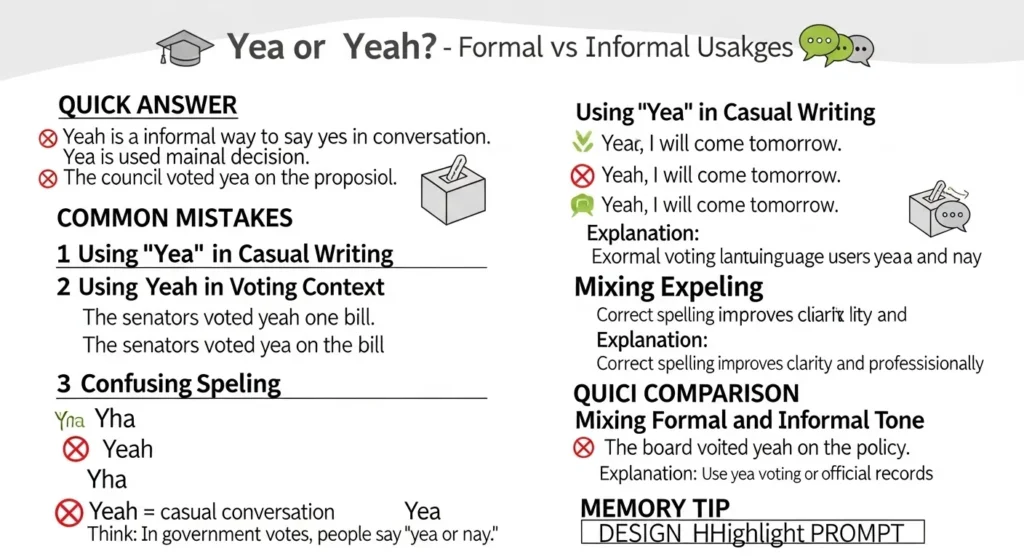
Using “Yea” in Casual Writing
❌ Yea, I will come tomorrow.
✅ Yeah, I will come tomorrow.
The word yea sounds formal and unusual in casual sentences.
Using “Yeah” in Voting Context
❌ The senators voted yeah on the bill.
✅ The senators voted yea on the bill.
Formal voting uses yea.
Confusing Spelling
❌ Yha
✅ Yeah
Correct spelling matters for clarity.
Mixing Formal and Informal Tone
❌ The board voted yeah on the policy.
✅ The board voted yea on the policy.
Use the correct form for formal language.
Yea and Yeah in Everyday Examples 📧📰📱🧾
Here are examples showing how each word appears in real life.
Text Message Example 📱
“Yeah, I’ll call you later.”
Social Media Example 📱
“Yeah, that was a great game!”
News Example 📰
“The council members voted yea on the new proposal.”
Historical Writing Example 🧾
“The assembly recorded thirty votes yea and ten votes nay.”
These examples show that yeah dominates casual communication.
Yeah or Yea : Google Trends & Usage Data
Search data shows that many English learners look up yea or yeah because the words sound identical in speech. When people hear the word in movies, podcasts, or conversations, they may not know which spelling is correct.
Countries with high search activity include:
- United States
- United Kingdom
- India
- Pakistan
- Canada
In modern writing, yeah appears far more often because it is used in everyday speech and online communication.
The word yea appears mostly in:
- government voting records
- historical texts
- formal parliamentary language
Comparison Table : Yea vs Yeah
| Word | Correct? | Meaning |
| Yeah | ✅ Yes | Informal way to say yes |
| Yea | ✅ Yes | Formal vote meaning yes |
| Yes | ✅ Yes | Standard formal word |
All three words show agreement, but they are used in different contexts.
FAQs About Yea or Yeah
1. Are yea and yeah the same?
No. They have different meanings and uses.
2. Which word is used in conversation?
Yeah.
3. What does yea mean?
It means “yes” in formal voting language.
4. Is yeah considered informal?
Yes. It is casual speech.
5. Can I use yea in normal sentences?
It is possible, but it sounds old-fashioned or formal.
6. Which spelling is more common?
Yeah is much more common in modern English.
7. What is the most formal word?
The most formal option is yes.
Conclusion
The confusion between yea or yeah happens because both words sound the same when spoken. However, their meanings and uses are different. The word yeah is an informal way to say yes and is widely used in everyday conversations, text messages, and social media. It creates a relaxed and friendly tone in communication.
The word yea, on the other hand, has a more formal meaning. It is mostly used in voting situations, particularly in government or parliamentary language, where decisions are recorded as yea or nay. Because of this specialized usage, most people rarely use yea in normal conversation.
There is no regional difference between British and American English for these words. The key is understanding the context. If you are talking casually with friends or writing informal messages, yeah is the correct choice. If you are describing a formal vote or historical decision, yea is the appropriate term.
Once you understand this simple difference, choosing between yea or yeah becomes easy and your writing will remain clear and accurate.

My name is Arthur Machen, and I am an English writer with a strong interest in language, ideas, and thoughtful storytelling. I enjoy writing content that feels natural, meaningful, and engaging, with a focus on clarity, depth, and a genuine connection with readers.