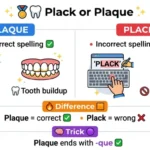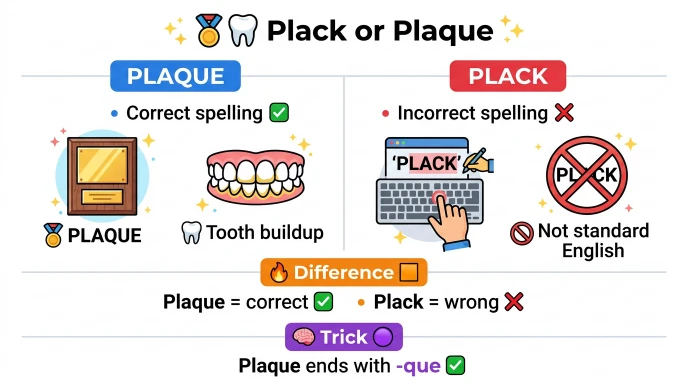
Plaque is the correct spelling in almost every modern writing situation. Plack is a real English word, but it is an old Scottish term for a small coin and is rarely used today.
I once read an award announcement that congratulated someone for receiving a “plack.” At first, I assumed it was just a typo. After checking a dictionary, I found something surprising. Plack is actually a real word, but it does not mean an award or a sign. It was the name of a small Scottish coin used hundreds of years ago.
The writer had meant plaque, which is the correct word for an engraved sign, commemorative plate, or even the sticky layer that forms on teeth. This mix-up explains why so many people search for plack or plaque. The two words look similar, but they have completely different meanings. A single missing letter can change what you are trying to say.
In this guide, you’ll learn the correct spelling, where each word came from, how British and American English treat the word, common mistakes to avoid, and plenty of real-life examples to help you use plaque correctly every time.
Plack or Plaque : Quick Answer
The short answer is simple:
- Plaque ✅ = Correct for an engraved sign, award, memorial plate, or dental buildup.
- Plack ⚠️ = A historical Scottish coin that is rarely used today.
Most people searching plack or plaque actually mean plaque.
Examples
Correct
- The school placed a plaque outside the library.
- The dentist removed plaque from my teeth.
- She received a bronze plaque for her achievement.
Historical
- The merchant paid with a plack in old Scotland.
Unless you are writing about Scottish history, plaque is almost always the correct choice.
The Origin of Plack and Plaque
Although these words look alike, they have completely different histories.
Plaque
The word plaque comes from French, where it means a flat plate or tablet. It entered English to describe decorative plates, engraved memorial signs, and later the sticky film that builds up on teeth.
Today, plaque commonly refers to:
- Memorial signs
- Award plates
- Nameplates
- Dental plaque
- Medical plaque found inside arteries
Plack
The word plack comes from Scotland. It referred to a small copper coin used several centuries ago.
Outside historical books and research, the word is almost never used today.
Why the Confusion Exists
People confuse these words because:
- They sound similar.
- Only one letter is different.
- Spell check may not always catch the mistake because plack is technically a real word.
British English vs American English Spelling
Unlike many English words, plaque does not have different British and American spellings.
Both countries spell it exactly the same way.
Comparison Table of Plack vs Plaque
| British English | American English | Correct? |
| Plaque | Plaque | ✅ Yes |
| Plack | Plack | Only as a historical coin |
Examples
British English
- A new plaque was placed outside the museum.
American English
- The city installed a memorial plaque downtown.
The spelling stays the same regardless of the country.
Which Spelling Should You Use?
Your choice is simple.
Use Plaque if you are writing about:
- Awards
- Memorial signs
- Buildings
- History displays
- Dental care
- Medical conditions
Use Plack only if you are discussing:
- Scottish history
- Ancient coins
- Historical documents
For Global Readers
Use plaque in almost every situation. Readers around the world recognize this spelling.
Common Mistakes with Plack or Plaque

Many writers make the same mistakes.
❌ Using plack instead of plaque
Incorrect:
- She received a gold plack.
Correct:
- She received a gold plaque.
❌ Writing plaque as a spelling mistake
Incorrect:
- The dentist cleaned the plack from my teeth.
Correct:
- The dentist cleaned the plaque from my teeth.
❌ Thinking plack is another English spelling
Incorrect:
- British English uses plack.
Correct:
- Both British and American English use plaque.
❌ Mixing historical and modern meanings
Incorrect:
- The museum unveiled a memorial plack.
Correct:
- The museum unveiled a memorial plaque.
Plaque or Plack in Everyday Examples
Here are examples from everyday writing.
We have ordered a new plaque for the office entrance.
News
The town unveiled a memorial plaque to honor local heroes.
Social Media
Finally received my graduation plaque today!
Formal Writing
A bronze plaque marks the entrance to the historic building.
Dental Example
Daily brushing helps remove plaque from your teeth.
Plaque vs Plack : Google Trends & Usage Data
Search interest strongly favors plaque because it is used every day in health, education, construction, and awards.
People often search this keyword because they:
- Want the correct spelling
- Write about awards
- Discuss dental care
- Prepare school assignments
- Edit business documents
Usage by Country
| Country | Common Usage |
| United States | Plaque |
| United Kingdom | Plaque |
| Canada | Plaque |
| Australia | Plaque |
| New Zealand | Plaque |
Keyword Comparison
| Word | Modern Usage | Historical Usage | Correct for Awards |
| Plaque | ✅ Very Common | Yes | ✅ Yes |
| Plack | ❌ Very Rare | ✅ Yes | ❌ No |
Frequently Asked Questions
Is plack or plaque correct?
Plaque is correct in almost every modern situation. Plack is an old Scottish word for a coin.
Is plack a real word?
Yes. It is a historical word referring to a small Scottish coin.
How do you spell an award plaque?
The correct spelling is plaque.
Is dental plaque spelled with “que”?
Yes. Plaque is the correct spelling for the sticky film that forms on teeth.
Do British and American English spell plaque differently?
No. Both use the spelling plaque.
Why do people confuse plack and plaque?
The words look and sound similar, but they have different meanings.
Should I ever use plack?
Only when writing about Scottish history or historical coins.
Conclusion
Understanding plack or plaque is easier once you know the meaning of each word. Plaque is the correct spelling for almost every modern use. Whether you are talking about an engraved award, a memorial sign, a nameplate, or dental plaque, this is the word you should choose. Plack is not a spelling mistake, but it belongs to history. It refers to a small Scottish coin that is rarely mentioned outside books about the past.
Unlike many English words, there is no British or American spelling difference here. Both varieties of English use plaque. If you accidentally write plack, readers may think it is a typo or become confused about your meaning. Before sending an email, publishing an article, or completing a school assignment, take a moment to check your spelling.
Choosing plaque in the right context makes your writing clear, accurate, and professional. Remember this simple rule: if you are talking about awards, signs, memorials, or teeth, plaque is almost always the correct word.
Discover More Articles:

My name is Antonia White, and I’m an English writer who enjoys crafting thoughtful and engaging stories. I focus on clarity and depth in my writing, aiming to connect with readers through meaningful ideas and a genuine, approachable style.