Bloat or fat are two completely different things that affect how your stomach looks and feels.
Many people search “bloat or fat” because both can make the belly appear bigger, and it becomes hard to tell whether it is temporary bloating or actual body fat gain.
This confusion is very common after meals, during stress, or when weight changes slowly over time. People often assume they are gaining fat when in reality it may just be gas, water retention, or digestion issues causing bloating.
This article will clearly explain the difference between bloat and fat in simple language. You will learn how each one forms, how to identify them, common causes, mistakes people make, and real life examples. By the end, you will be able to easily understand whether your body change is temporary bloating or long term fat.
Bloat or Fat Quick Answer ⚡
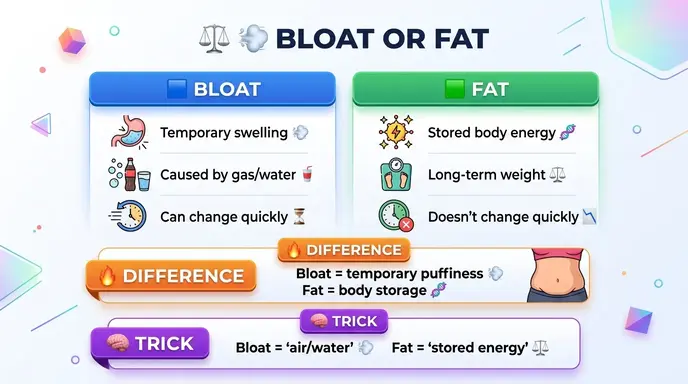
Bloat is temporary swelling in the stomach caused by gas or water. Fat is long term body mass stored under the skin.
Simple difference:
- Bloat = short term, changes within hours
- Fat = long term, changes over weeks or months
Examples:
- After eating a big meal, your stomach feels tight → bloat
- Gradual weight gain over time → fat
Key point:
Bloating comes and goes, fat stays unless lifestyle changes happen.
The Origin of Bloat and Fat 📜
The confusion in “bloat or fat” comes from how both affect body appearance but have different biological causes.
Bloat:
- Comes from the word “bloat,” meaning to swell or expand
- Linked to digestion, gas, and water retention
Fat:
- Comes from Old English “fætt,” meaning well fed or thick
- Refers to stored energy in the body
Why confusion happens:
- Both make the stomach look bigger
- Both can feel uncomfortable
- People often notice changes visually, not medically
But medically, they are completely different processes.
Bloat vs Fat Key Differences 🌍
| Feature | Bloat | Fat |
| Duration | Temporary (hours) | Long term (weeks/months) |
| Cause | Gas, digestion, water | Calorie surplus |
| Feel | Tight, full, swollen | Soft, stable |
| Change speed | Fast (sudden) | Slow (gradual) |
| Reversible | Yes, quickly | Needs lifestyle change |
Simple understanding:
Bloat is a “temporary stomach reaction,” while fat is “stored energy.”
Which Is It: Bloat or Fat? 🧠
To understand “bloat or fat,” you can observe your body:
It is likely bloat if:
- Stomach changes size within hours
- You feel tight after eating
- Morning stomach is flatter
It is likely fat if:
- Belly size stays the same all day
- Weight increases slowly over time
- Clothes feel tighter consistently
Easy rule:
Fast change = bloat
Slow change = fat
Common Causes of Bloat or Fat ⚠️

Causes of bloat:
- Eating too fast
- Carbonated drinks
- High salt foods
- Digestive sensitivity
- Hormonal changes
Causes of fat:
- Eating more calories than needed
- Lack of physical activity
- Poor sleep habits
- Long term overeating
Key difference:
Bloat is immediate reaction, fat is accumulation over time.
Fat and Bloat in Everyday Life 📝
1. After meals 🍽️
- Feeling heavy after eating rice or bread → bloat
2. Morning vs evening 🌅
- Flat stomach in morning, bigger at night → bloat
3. Long term change 📈
- Gradual belly increase over months → fat
4. Clothing fit 👕
- Tight after meals but normal later → bloat
- Always tight → fat
5. Stress impact 😟
- Stress causes digestion issues → bloat
- Stress overeating over time → fat
Bloat or Fat Common Mistakes ⚠️
1. Assuming every belly size increase is fat
Many people panic after meals thinking they gained fat instantly.
2. Ignoring digestion signals
Gas and bloating are often ignored.
3. Confusing water retention with fat
Salt intake can cause temporary swelling.
4. Daily weight checking confusion
Natural body fluctuations lead to wrong assumptions.
5. Overthinking body changes
Small changes are often normal digestion responses.
Bloat or Fat Real Life Examples 🧾
Example 1:
After eating pizza, stomach feels tight → bloat
Example 2:
After holidays, weight increases gradually → fat
Example 3:
Morning flat stomach, evening swollen belly → bloat
Example 4:
Clothes getting tighter every month → fat
Example 5:
Drinking soda causes puffiness → bloat
Fat vs Bloat Simple Identification Guide 📊
| Situation | Likely Cause |
| After eating | Bloat |
| Morning flat, evening big | Bloat |
| Long term weight gain | Fat |
| Sudden stomach tightness | Bloat |
| Consistent body size increase | Fat |
FAQs ❓ Bloat or Fat
1. How can I quickly tell bloat or fat?
If it changes within hours, it is bloat. If it changes over weeks, it is fat.
2. Can bloat make you look fat?
Yes, but only temporarily.
3. Does fat go away quickly?
No, fat needs long term lifestyle changes.
4. Is bloating dangerous?
Usually no, it is a normal digestion response.
5. Why does my stomach change size daily?
It is mostly due to bloat, food, and water retention.
6. Can drinking water cause bloat?
In rare cases, yes, especially if digestion is sensitive.
7. Do skinny people get bloat?
Yes, bloat can happen to anyone regardless of body type.
Conclusion 🧾
Understanding “bloat or fat” is important because both look similar but are completely different conditions. Bloating is temporary and usually caused by food, digestion, or water retention, while fat is a long term accumulation of excess calories stored in the body.
Many people mistakenly think they are gaining fat when it is only bloating, which leads to unnecessary stress.
The easiest way to identify the difference is timing. If your stomach changes quickly within hours, it is bloat. If it changes slowly over weeks or months, it is fat.
Learning this simple rule helps you avoid confusion and better understand your body. Instead of worrying about every small change, focus on patterns over time. This will give you a much clearer and more accurate picture of your health and body changes.
Discover More Articles:

My name is Arthur Machen, and I am an English writer with a strong interest in language, ideas, and thoughtful storytelling. I enjoy writing content that feels natural, meaningful, and engaging, with a focus on clarity, depth, and a genuine connection with readers.