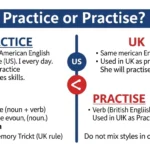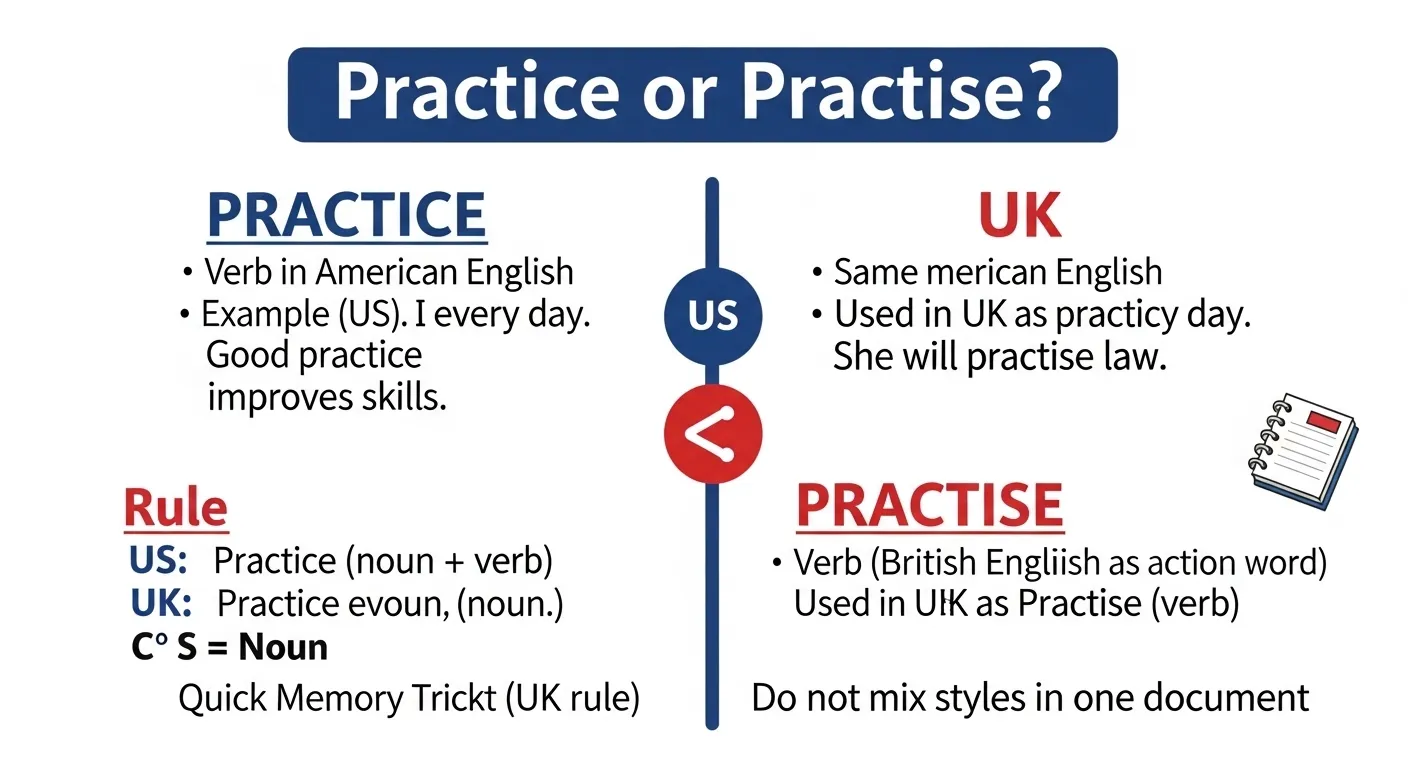
Practice is a noun in American English and both noun/verb in American English, while practise is a verb in British English.
I once wrote, “I need to practise more,” in a document for a US client. It was marked wrong. Later, I wrote “daily practice” for a UK audience, and that was correct.
That moment made me realize why so many people search “practice or practise.” The confusion happens because British and American English follow different grammar rules for this word. The spelling changes based on region and part of speech.
In this guide, I will explain the difference clearly, with rules, examples, tables, and professional advice.
Practice or Practise: Quick Answer ✅
The rule depends on region.
🇺🇸 American English
- Practice → Used for both noun and verb
Examples:
- I need more practice. (noun)
- I practice every day. (verb)
🇬🇧 British English
- Practice → Noun
- Practise → Verb
Examples:
- She runs a medical practice. (noun)
- She will practise medicine. (verb)
That is the core difference.
The Origin of Practice and Practise 📜
The word comes from Greek “praktikos,” meaning active or practical.
It passed into Latin, then Old French, and finally English.
In early English, spelling was not fixed. Over time:
- British English kept a spelling difference between noun and verb.
- American English simplified the rule and used practice for both forms.
American spelling reforms were influenced by Noah Webster, who preferred simpler and more consistent spellings.
That is why American English does not use “practise.”
British English vs American English Spelling 🇬🇧🇺🇸
This word is special because the spelling changes by grammar in British English.
Comparison Table
| Region | Noun | Verb |
| American English | Practice | Practice |
| British English | Practice | Practise |
Let’s compare with examples:
| Sentence Type | American | British |
| Noun | Good practice is important. | Good practice is important. |
| Verb | I practice daily. | I practise daily. |
So the key difference appears only in British English verbs.
Which Spelling Should You Use? 🎯
Choose based on audience and grammar.
- 🇺🇸 Writing for US → Always use practice
- 🇬🇧 Writing for UK → Use practice (noun) and practise (verb)
- 🌏 International writing → Pick one regional style and stay consistent
If you are unsure, check who will read your content.
Professional tip:
If your audience is mixed, American spelling is often accepted globally.
Common Mistakes with Practice or Practise ❌
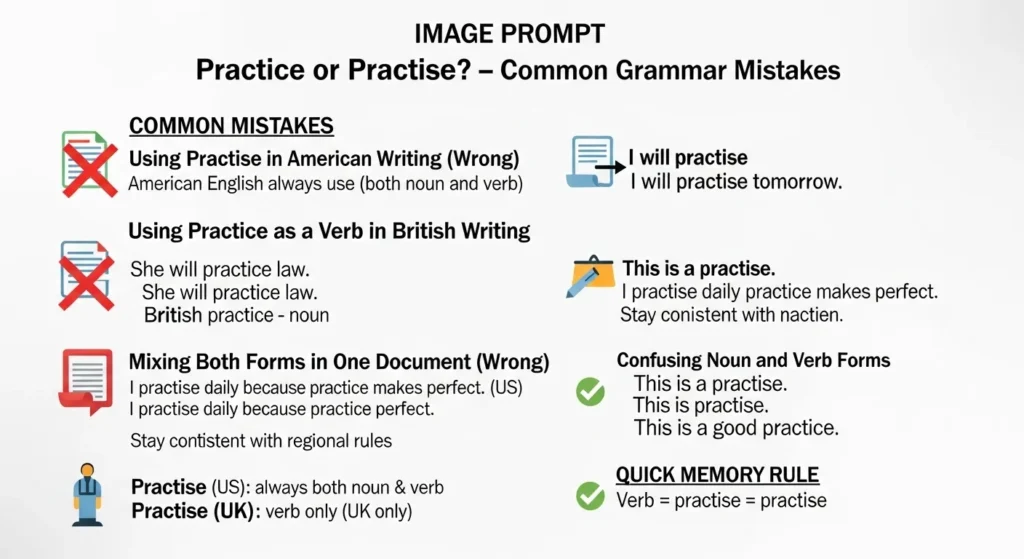
Using Practise in American Writing
❌ Wrong (US context): I will practise tomorrow.
✅ Correct: I will practice tomorrow.
Using Practice as a Verb in British Writing
❌ Wrong (UK context): She will practice law.
✅ Correct: She will practise law.
Mixing Both Forms in One Document
❌ Wrong: I practise daily because practice makes perfect. (US document)
✅ Correct (US): I practice daily because practice makes perfect.
✅ Correct (UK): I practise daily because practice makes perfect.
Confusing Noun and Verb Forms
❌ Wrong: This is a good practise.
✅ Correct: This is good practice.
Always check if the word shows action (verb) or thing (noun).
Practise or Practice in Everyday Examples 📧📰📱🧾
Here is how the word appears in daily communication.
US Style:
Please practice the presentation before the meeting.
UK Style:
Please practise the presentation before the meeting.
📰 News
- The doctor opened a new medical practice. (US & UK noun same)
- She will practise medicine in London. (UK verb)
📱 Social Media
- Practice makes perfect!
- Time to practise guitar every day!
🧾 Formal Writing
- Legal practice requires experience.
- Lawyers must practise ethically. (UK)
Notice how noun form stays the same in both regions.
Practice or Practise: Google Trends & Usage Data 📊
Search data shows:
- 🇺🇸 United States → “practice” dominates.
- 🇬🇧 United Kingdom → Both forms appear, depending on grammar.
- 🇦🇺 Australia & 🇨🇦 Canada → Usually follow British rules.
Many learners search:
- “practice vs practise difference”
- “practice or practise UK rule”
Confusion is highest among students and exam writers.
Side-by-Side Comparison Table of Practice vs Practise 📌
| Feature | Practice | Practise |
| Part of Speech | Noun (US & UK), Verb (US) | Verb (UK only) |
| Used in America | Yes | No |
| Used in Britain | Yes | Yes |
| Meaning | Training or action | To perform repeatedly |
| Example | Good practice helps. | She will practise piano. |
This table shows the rule clearly.
Frequently Asked Questions (FAQs) ❓
1. Is practise wrong?
Not in British English. It is correct as a verb.
2. Is practice wrong?
No. It is correct everywhere as a noun and in American English as a verb.
3. Why does British English separate them?
To clearly show noun and verb forms.
4. Which spelling is more common worldwide?
“Practice” appears more often because American English is widely used online.
5. How do I remember the rule?
In British English:
- C = Noun
- S = Verb
6. Do they sound different?
No. The pronunciation is the same.
7. What about exams like IELTS?
Follow British spelling rules unless told otherwise.
Conclusion 🏁
So, practice or practise? The answer depends on region and grammar. In American English, practice works for both noun and verb. In British English, practice is the noun, and practise is the verb.
I learned that checking the audience first prevents mistakes. If you mix the two forms, your writing can look careless. Always decide your regional style and follow it consistently.
This difference exists because American English simplified spelling rules, while British English kept the traditional distinction.
Now you can write confidently in emails, essays, and professional documents. Use the correct form based on region and grammar, and your writing will look polished and accurate.

My name is Antonia White, and I’m an English writer who enjoys crafting thoughtful and engaging stories. I focus on clarity and depth in my writing, aiming to connect with readers through meaningful ideas and a genuine, approachable style.